

A bulk order can look straightforward until product descriptions differ, documents are incomplete, or arrival checks reveal a mismatch. For bulk African staples for importers, a reliable plan starts before you request a quote: define the goods, assign responsibilities, and agree how delivery will be checked.
Importing staples takes more than finding a supplier. You need a clear procurement brief, comparable offers, agreed shipment responsibilities, and a plan for inspection and discrepancy handling at destination. This guide walks through those steps and shows where to check destination requirements before committing.
AgriVerse-X lists packaged staples such as poundo yam flour, semovita, ground dried pepper, and peeled egusi, alongside bulk commodities including soybeans, sesame seeds, and honey beans. Product availability, formats, order quantities, origins, and destinations should be confirmed directly before proceeding. Specify, coordinate, and verify each stage to reduce avoidable delays from sourcing through arrival.
Key Takeaways
- Define your sales channel, customer, and destination first to identify the product format and packaging details to confirm.
- Separate essential requirements from preferences in your procurement brief so supplier offers are easier to compare.
- Choose a shipping plan based on shipment size, urgency, handling needs, and destination access rather than assuming one option fits every order.
- For bulk African staples for importers, verify destination-specific requirements and document responsibilities before dispatch.
- Assess supplier fit, confirm order terms, and agree in advance how goods and discrepancies will be handled on arrival.
Bulk African staples for importers: define the shipment before sourcing
Bulk sourcing is a commercial procurement process built around a defined quantity, buyer, sales channel, and destination. It isn’t simply a larger retail purchase. Before requesting offers, decide how you’ll sell or use the goods, then describe the shipment in terms suppliers can answer consistently.
A product’s regional familiarity doesn’t establish its commercial fit. Africa’s food traditions include a wide range of common African staples, but importers still need to specify the product and format their buyers require. Retail customers may need consumer-ready packs, while food-service buyers may prioritize formats suited to their operations. Distributors may need packaging that fits their handling and resale plans, and processors may require a form suitable for further use. Treat these as requirements to confirm, not assumptions about what a supplier offers.
Which African staple categories fit your buyer and sales channel?
AgriVerse-X lists packaged staples including poundo yam flour, semovita, ground dried pepper, and peeled egusi. Its bulk commodity categories include soybeans, sesame seeds, honey beans, and W320 oven-roasted cashew nuts. Match the category to your customer and sales channel, then confirm the available form and packaging with the supplier. For example, a retailer may seek packaged goods for resale, while a processor may be evaluating a commodity as an input.
What belongs in an importer’s initial product brief?
Give every potential supplier the same written starting point. Separate essential requirements from preferences so offers remain comparable and trade-offs are visible.
- Product identity: Name the specific staple or commodity, not just “African food.”
- Intended use: State whether it is for retail, food service, distribution, or processing.
- Required form: Describe the product form you need and ask the supplier to confirm what’s available.
- Packaging needs: Record the format you require. Treat unconfirmed pack options as questions, not facts.
- Destination market: Identify where the goods will be received so you can check destination-specific requirements.
- Target volume and delivery window: State your purchasing requirements, but don’t treat them as supplier commitments until confirmed.
An importer-ready product specification is a written description of the product, intended use, required form and packaging, target volume, delivery window, and destination. Use it to request like-for-like offers. Ask the supplier to confirm current availability and any product details not yet stated. AgriVerse-X’s listed categories give buyers a starting point for exploring packaged staples and commodities, but confirm current availability, formats, quantities, and shipment requirements directly before proceeding.
Set product specifications before requesting bulk staple offers
A supplier quote is useful only if you can compare it with another on the same basis. A description such as “quality beans” or “finely ground pepper” may leave important details open to interpretation. Set requirements in writing first, then ask every supplier to respond to the same brief. This makes differences in product, packaging, delivery assumptions, and unconfirmed terms easier to spot before they shape an order.
Separate must-haves from preferences. Must-haves define an acceptable offer, such as the exact product, required form, target quantity, and destination. Preferences can help rank suitable offers, but shouldn’t obscure whether a supplier meets your core requirements.
How to describe staple form, grade, and packaging needs
Name the staple precisely and state its processing form and intended application. If you’re sourcing ground dried pepper, for example, confirm that the offer matches the form your buyer needs instead of assuming product descriptions are interchangeable. Ask suppliers to list available packaging formats and quantities for that product. If they use grade or quality terms, request a written definition and the basis for assessing them. Don’t treat an undefined label as a comparable specification.
Where applicable, request supporting product or lot information, such as available test results or lot identification details. These aren’t universal requirements for every product or shipment, so mark each item as requested, confirmed, unavailable, or still to be verified. For U.S.-bound food, the FDA’s food import guidance can help you identify destination considerations to check alongside the commercial product brief.
How to compare supplier offers on an equal basis
Build a simple comparison table and hold the assumptions steady: product identity, form, quantity, packaging needs, destination, and requested delivery window. Record what each supplier has confirmed in writing. Keep estimates, exclusions, substitutions, and unanswered questions separate so tentative details don’t appear settled.
- Confirmed: The supplier has stated the detail in writing.
- Estimated: The supplier has provided an indicative figure or plan that may need reconfirmation.
- Excluded: The offer explicitly leaves out a requirement or responsibility.
- To verify: The detail is missing, unclear, or depends on further confirmation.
A complete procurement specification is a buyer-defined record of product identity, form, intended use, quality terms and basis, packaging, quantity, and delivery assumptions for a particular order. It creates a shared comparison point, not a universal standard. Before selecting an offer, resolve ambiguous product names and quality descriptions directly with the supplier. Buyers exploring AgriVerse-X’s listed staple and commodity categories can use the same approach to clarify product details and order requirements before proceeding.
Compare shipping plans for bulk African staples without assuming one route fits all
Freight selection is a trade-off, not a default setting. For bulk African staples for importers, compare shipment size, urgency, product handling needs, and access at both ends before choosing a transport plan. Air, ocean, or overland transport may be options depending on origin, destination, and shipment arrangements, but no mode or route is best for every order. Ask suppliers or carriers to confirm schedules and service availability for your specific shipment.
What should importers compare when evaluating freight options?
Assess how the shipment’s volume and handling requirements fit each option, how much flexibility you have on transit time, and whether the destination can receive the goods as planned. Then get operating responsibilities in writing. Confirm who arranges transport, insurance, export steps, and import clearance, and distinguish confirmed arrangements from estimates or services still to be checked.
| Decision factor | Trade-off to assess | Question to confirm |
|---|---|---|
| Shipment size | Does the option suit the volume and shipment arrangement? | What quantity and load details does the carrier require? |
| Urgency | How does the planned transit time fit your delivery window? | Is the schedule confirmed for these dates and this route? |
| Handling | Can the option meet the product’s agreed handling needs? | What handling conditions and protective measures are included? |
| Destination access | Will the receiving point and onward movement work with the plan? | Who coordinates arrival, clearance, and delivery to the named place? |
Use the same assumptions when comparing plans. A schedule, route, or service option is specific to the shipment, not guaranteed by a general estimate. Broader context also matters: the World Bank discusses opportunities and challenges in transforming Africa’s food systems and agribusiness. Its overview of African food-system transformation can inform market context, while your freight plan still needs direct confirmation.
How do Incoterms clarify shipment responsibilities?
Incoterms provide a framework for allocating defined delivery responsibilities between buyer and seller. They don’t replace the full sales contract or automatically settle every question about insurance, payment, or import procedures. In the contract, verify the applicable Incoterms version and precise named place, then make sure the wording matches the agreed shipment plan.
Before committing, assign each responsibility to a party: who books transport, handles export steps, arranges insurance if agreed, and manages import clearance. If responsibility or the point where risk transfers remains unclear, pause and seek qualified trade advice. Clear allocation helps everyone plan around the same handoff instead of relying on assumptions.
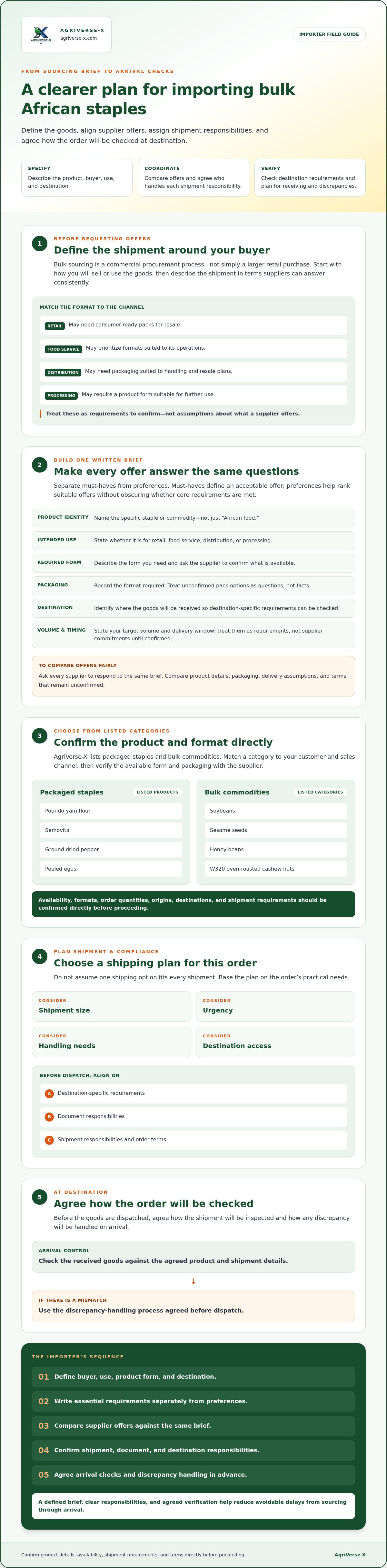
Prepare documents, destination checks, and receiving controls before dispatch
Documentation is shipment-specific. Requirements can vary with the product, country of origin, destination, and agreed shipment arrangement, so don’t assume one document set works for every order. Align product descriptions, quantities, and other commercial details across the records before dispatch. Inconsistencies can prompt questions that take time to resolve.
Import requirements must be checked with the authorities responsible for the destination market. Supplier or freight-provider guidance can be useful input, but verify requirements through official destination-country sources and qualified local specialists.
Which import documents and rules should buyers verify?
Use this sequence as a planning checklist, not a universal compliance list. Label each check for the specific destination and shipment, and record who will confirm it.
- Confirm destination requirements: Check official sources for food import, customs, labeling, and plant-health rules that may apply to the product.
- Confirm product classification: Ask a qualified local specialist to verify classification and any related documentation or permit questions.
- Map document responsibilities: Ask the supplier and freight provider which records they can provide, who prepares each item, and when it will be available.
- Reconcile shipment details: Compare product descriptions, quantities, parties, and other commercial information across the documents before dispatch. Resolve mismatches rather than relying on informal explanations.
- Close open checks: Mark each destination-specific requirement as confirmed or outstanding, and identify who will resolve it before the shipment moves.
Some shipments may involve commercial records such as invoices, packing details, or transport documents, but the applicable set must be verified for the particular transaction. A document’s presence alone doesn’t confirm that its content or format meets destination requirements.
How should importers inspect and document goods on arrival?
Agree on a receiving routine before dispatch. Assign who will check the shipment, which records they’ll compare it against, and how exceptions will be raised. On arrival, count the goods, inspect packaging condition, confirm product identity against the order, and note visible discrepancies. Record findings promptly with shipment references and clear supporting evidence, such as dated photographs where appropriate.
Set the communication path in advance: specify who receives the discrepancy notice, what information to include, and how the parties will discuss resolution. Keep the order, shipping references, inspection notes, and related correspondence together. This creates a shared record without assuming the outcome or resolution process.
Before placing an order, review AgriVerse-X’s listed staple categories and confirm product, shipment, and documentation details directly.
Coordinate your bulk African staples order with a sourcing-ready supplier
A well-planned order follows a clear sequence: confirm the product brief, compare written offers against it, verify commercial and shipment terms, then prepare for receiving. This helps bulk African staples for importers move from a sourcing idea to a defined transaction, while keeping open questions visible before anyone authorizes dispatch.
What should buyers confirm with a supplier before proceeding?
Before committing, ask the supplier to confirm the details for your specific order in writing. Check product availability, form, packaging, quantity, and any supporting product or lot information that applies. Don’t assume a category listing confirms a particular format, volume, origin, or shipment schedule.
Then make responsibilities explicit. Confirm the parties’ roles for transport, export steps, insurance if agreed, and import clearance. Record timing assumptions as estimates or confirmed arrangements, as appropriate. Ask what documentation the supplier expects to provide and what the buyer or freight provider must arrange. Resolve unanswered destination-compliance and receiving questions before authorizing dispatch. If a detail is still open, name the person responsible for confirming it and the decision it affects.
How can AgriVerse-X fit an importer’s sourcing workflow?
AgriVerse-X is a decentralized agricultural marketplace with listed packaged staples such as poundo yam flour, semovita, ground dried pepper, and peeled egusi, as well as commodities including soybeans, sesame seeds, honey beans, and W320 oven-roasted cashew nuts. These listings can help buyers explore relevant categories, but they don’t confirm current stock, packaging, order quantities, export destinations, or delivery arrangements. Clarify those requirements directly before proceeding.
The company describes its marketplace as integrating blockchain technology and native AVX tokens. Treat that as platform context, not proof of a particular payment, transaction, documentation, or logistics capability. Ask which features apply to your proposed order and confirm how any relevant process works before relying on it.
Keep your decision gate simple: proceed only when the product brief matches the written offer, responsibilities are clear, and destination checks and receiving arrangements have owners. This gives buyer and supplier a shared basis for the next step without assuming a marketplace listing guarantees fulfillment or transport.
Explore AgriVerse-X and discuss your sourcing requirements to clarify current product and order details.
Turn your sourcing plan into a confident next step
Strong procurement starts with a precise product brief. Define the intended use, form, packaging, volume, and destination before requesting offers, then compare supplier responses against the same requirements. Confirm freight responsibilities and destination-specific documents before dispatch, and agree on a receiving process to check quantities, packaging, and product identity.
These steps give bulk African staples for importers a clearer path from supplier discussions to arrival. They also help surface unanswered questions early, when they’re easier to address than after goods are in transit. AgriVerse-X lists packaged staples and bulk agricultural commodities for buyers to explore. The company describes its marketplace as integrating blockchain technology and native AVX tokens. Confirm directly which transaction or other platform features apply to your order.
Start with your product and shipment requirements, then clarify current availability, formats, quantities, and arrangements. Explore AgriVerse-X and discuss your sourcing requirements. A defined brief and documented plan can help you move forward with greater clarity and control.
Frequently Asked Questions
How do importers buy African staples in bulk?
Start with a written brief that names the product, intended use, required form, packaging needs, target quantity, and destination. Request offers against the same specification so you can compare them fairly. Before confirming an order, verify current availability, shipment responsibilities, documentation expectations, destination requirements, and receiving procedures with the supplier and relevant trade professionals. This structured approach helps bulk African staples for importers move forward with fewer avoidable uncertainties.
Which African food staples can be sourced in bulk?
Available products depend on the supplier and current inventory. AgriVerse-X lists packaged staples such as poundo yam flour, semovita, ground dried pepper, and peeled egusi, alongside commodities including soybeans, sesame seeds, honey beans, and W320 oven-roasted cashews. These listings identify categories to explore, not guaranteed stock or order quantities. Confirm the exact product form, packaging, quantity, and availability directly before planning an import or making commitments to your customers.
What documents are required to import African food staples?
There isn’t one document list that applies to every food shipment. Requirements can depend on the product, origin, destination, transport arrangement, and applicable local rules. Ask the supplier and freight provider which documents they can provide, then check customs, food, labeling, and plant-health requirements through official destination sources or qualified local specialists. Reconcile product descriptions and shipment details across commercial documents before dispatch, and resolve missing or inconsistent information in advance.
How do importers choose between sea freight and air freight?
Compare shipment size, urgency, product handling needs, destination access, and available services for the specific order. Don’t assume one mode is always cheaper, faster, or more suitable. Ask providers to confirm shipment-specific schedules, responsibilities, and terms, then weigh those details against your inventory plan and receiving capacity. Include any storage or handling requirements in the comparison, and confirm the proposed arrangement with the supplier and freight provider before booking.
What should a bulk staple purchase order include?
A purchase order should record the product identity, agreed form and specifications, packaging, quantity, delivery destination, shipment responsibilities, document expectations, and process for reporting discrepancies. Include only terms confirmed by both parties. Check that the commercial product description and quantity match across the purchase order and shipment documents. Clarify open questions before authorizing dispatch so the supplier, buyer, and other involved parties share the same understanding of the transaction.
How can importers check staple quality before shipment?
Agree in writing on the product description and relevant quality criteria before comparing supplier offers. Ask what product or lot information, inspection evidence, or supporting documents the supplier can provide, then confirm that each item applies to the specific order. If independent inspection is appropriate, define its scope, timing, and reporting process in advance. Don’t assume one grading term or quality standard applies across different staple categories or suppliers.
What should importers do when a shipment arrives with discrepancies?
Follow the receiving and discrepancy process agreed before dispatch. Check the shipment count, product identity, and packaging condition against the order, then promptly record any mismatch with shipment references and supporting evidence. Notify the relevant parties using the agreed communication route, and keep copies of messages and inspection records. The applicable remedy depends on the contract and circumstances, so seek qualified trade advice if the parties can’t resolve the issue.


