

Bulk agricultural commodity procurement creates value when it connects producers with buyers and coordinates sourcing, purchasing, storage, and delivery around clear commercial requirements. For manufacturers, millers, wholesalers, and food-service businesses, the right sourcing route depends on the commodity, required volume, product specifications, timing, and logistics.
Reliable procurement depends on clear information and coordinated execution at every stage. This guide explains how trading services support producers and buyers, compares sourcing routes such as brokers, tenders, trade events, and longer-term contracts, and covers practical considerations for buying oilseeds, vegetable oils, biodiesel, and grains in bulk. Use it to assess supply needs, understand the trade-offs between sourcing options, and identify where coordination can make a transaction more manageable.
Key Takeaways
- Compare brokers, tenders, trade shows, and longer-term contracts against your supply, timing, and flexibility needs.
- Track contracts, orders, inventory, shipments, and deliveries together to strengthen supply visibility and planning.
- Match commodity specifications and handling requirements to the needs of manufacturers, millers, wholesalers, and food-service businesses.
- Use relevant agricultural marketplace and professional service connections to support procurement coordination and traceability.
- Assess inventory accuracy, delivery terms, and any relevant professional qualifications, licences, insurance, or local authorisations before a transaction proceeds.
Bulk Agricultural Commodity Procurement: Sourcing and Purchasing Challenges
Commodity purchasing connects producer supply with buyer specifications, timing, and delivery requirements. In the United States, procurement can also support domestic food assistance and humanitarian food aid.
Bulk Agricultural Product Sourcing
Bulk agricultural product sourcing means identifying and buying large quantities of farm commodities. US buyers can source grain, oilseeds, pulses, and other products from producers, processors, trading firms, and approved vendors. The USDA Agricultural Marketing Service (AMS) buys domestically produced and processed foods, including grains and rice, to support American agriculture and supply nutrition assistance and humanitarian food aid programmes. Before requesting offers, define the product, volume, grade, destination, and delivery window.
Agricultural Commodity Purchasing Costs
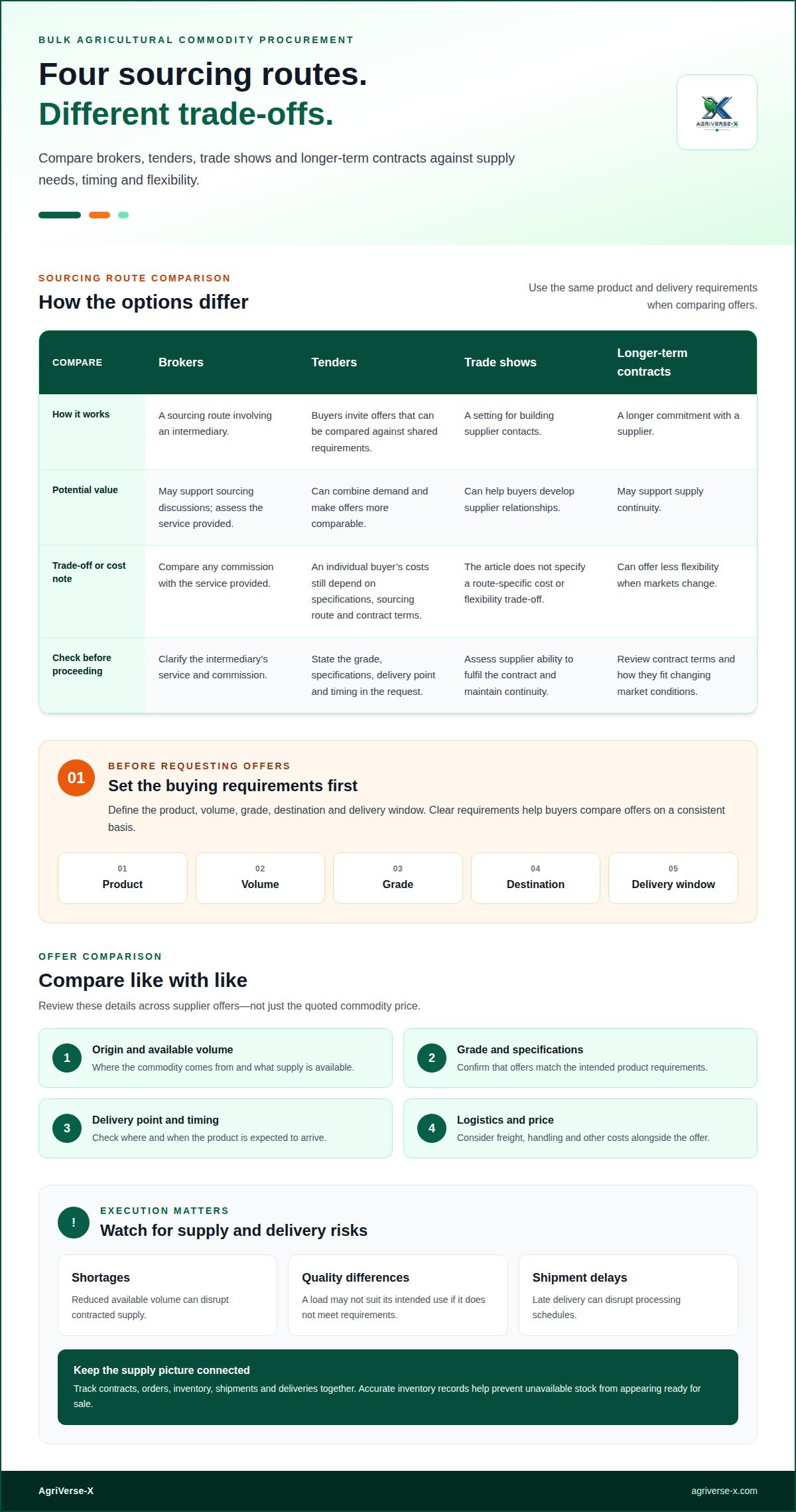
Agricultural commodity purchasing costs include the product price and the expenses involved in receiving it. A buyer’s landed cost may include transport, storage, handling, inspection, and intermediary commissions. Compare any broker’s commission with the service provided. Tendering can combine demand, but costs for an individual buyer still depend on specifications, sourcing route, and contract terms.
Regional Availability and Delivery Costs
Regional availability and delivery costs depend on where a commodity originates, where inventory is held, and how it will be transported. US buyers can assess nearby producers and storage sites alongside broader domestic supply. Availability affects sourcing options, while distance, freight route, handling, and timing affect logistics costs. A mill comparing a nearby grain offer with a more distant one should consider freight and delivery schedules, not just the quoted commodity price. International sourcing also involves cross-border logistics and documentation.
Procurement and Contract Negotiation
Procurement and contract negotiation establish purchase terms and coordinate execution from order to delivery. Buyers can source through brokers, competitive tenders, trade shows, or longer-term contracts. Tenders invite comparable offers; trade shows help build supplier contacts; and longer contracts may support continuity but offer less flexibility when markets change. AMS commodity purchases use competition among approved vendors. Bidders should review its Master Solicitation, Solicitation Information, and USDA Commodity Requirements. Keep contracts, orders, inventory, shipments, and deliveries connected. Market updates and discussions with clients can inform sourcing plans, while international procurement and food-aid reports help organize supply-chain and programme information.
Supplier, Bid, and Grade Comparisons
Supplier, bid, and grade comparisons show whether offers meet the same product and commercial requirements. Compare origin, available volume, stated grade, delivery point, timing, logistics, and price. USDA AMS bulk grain purchases follow the Official United States Standards for Grain. For other transactions, include the required grade and specifications in the request so offers are comparable. Assess the supplier’s ability to fulfil the contract and maintain continuity, not just the initial offer.
Payment, Financing, and Price Risk
Payment, financing, and price-risk arrangements determine how buyers fund purchases and manage changing commodity prices. Contracts may set payment timing, deposits, or staged payments against delivery documents. Any financing depends on appropriately licensed partners, applicable laws, eligibility, and due diligence. Price-risk arrangements also depend on the buyer’s circumstances and applicable requirements. Each arrangement can affect cash flow, exposure, and execution differently. Consult qualified professionals about available options and their terms; market updates are not guaranteed price forecasts.
Crop, Quality, and Delivery Risks
Crop, quality, and delivery risks can disrupt contracted supply or prevent a delivery from being accepted. Shortages can reduce available volume; quality differences can make a load unsuitable for its intended use; and shipment delays can disrupt processing schedules. Set clear grade, inspection, delivery, and documentation terms in contracts. Maintain accurate inventory records across vendors, warehouses, and shipments, since inaccurate data can make unavailable stock appear ready for sale. For food assistance, organize procurement and delivery records to support programme reporting.
How AgriVerse-X Is Designed to Support Agricultural Procurement
AgriVerse-X is designed to connect buyers, producers, cooperatives, and service providers through digital profiles and marketplace listings. These planned or developing connections may help buyers identify relevant products or procurement support, while sellers may be able to present products, services, skills, and certifications through a single profile.
For a buyer arranging grain or oilseed supply, relevant information and contacts can help frame sourcing discussions. Product listings may clarify intended use, while professional service listings could support market research, laboratory testing, export documentation, and procurement planning, subject to availability.
Connect Commodity Buyers and Sellers
Digital profiles are intended to give agricultural participants a structured way to showcase products and capabilities. The planned marketplace may cover agricultural goods, machinery, inputs, technology, logistics, processing, packaging, and value-addition. For example, a grain buyer could look for maize, rice, wheat, or feed grains and distinguish planting seed from products intended for food, feed, processing, or industrial use. Clear product context can help buyers frame practical sourcing discussions.
AgriVerse-X may support connections related to bulk agricultural commodities, including soybeans, sesame seeds, and honey beans; this is not a claim that AgriVerse-X currently distributes them. Availability and transaction terms would depend on the relevant listing and agreement. Digital traceability records may help organize product and transaction information, while compliance-aligned reporting could structure records for business use.
Coordinate Professional Procurement Support
Some procurement needs call for specialist input as well as a commodity. AgriVerse-X is intended to support connections to listings for procurement services, market research, agronomy, farm auditing, laboratory testing, certification support, export documentation, and agricultural research. Availability may depend on platform development and qualified service partners. These services could support different stages, from understanding supply options to organizing product assessment and trade documentation.
A cooperative preparing an offer for a buyer, for example, could seek procurement or market research support, then consider laboratory testing or certification support where relevant. A business arranging international shipments may need export documentation and logistics coordination. These are illustrative procurement pathways, not guaranteed outcomes or currently confirmed services.
Build a Practical Procurement Workflow
Start by defining the commodity, intended use, quantity, destination, and required delivery window. Then identify relevant product listings and service needs, where available. A buyer sourcing sesame for processing, for example, should state its intended use and determine whether testing, export documentation, or logistics support is needed. Sellers may be able to present product details and related capabilities through digital profiles as this functionality is developed.
Digital records may help organize product, service, and transaction information. However, a profile or record does not by itself certify product quality or regulatory compliance. Verify relevant qualifications, licences, insurance, and local authorisations for professional services. Requirements vary by jurisdiction, and regulated work depends on qualified professionals and applicable permissions.
If you need agricultural products or procurement-related services, contact AgriVerse-X to discuss your requirements and ask about current availability.
Practical Procurement Needs Across Commodity Supply Chains
Commodity procurement works best when product specifications fit the buyer’s operations and delivery plan. A grain mill, food manufacturer, wholesaler, or hotel kitchen may each need different grades, processing states, and delivery schedules.
Oilseeds, Oils, Biodiesel, and Grains
Oilseed and grain procurement involves sourcing crops for food, feed, processing, or industrial use. Buyers should specify the commodity, intended use, required grade, volume, origin, and delivery point. Soybeans, sesame, maize, and rice serve different processing and market needs, so a broad label such as “bulk grain” is not enough to compare offers.
Vegetable oil procurement covers oils purchased for a defined use and processing state. Specify whether the oil is food-grade, cosmetic-grade, industrial-grade, or feed-grade, and whether it is crude, refined, filtered, or processed. For biodiesel procurement, define the relevant feedstock or product, processing stage, volume, and delivery terms. These details guide supplier selection and shipment planning.
For US grain purchases made by the USDA Agricultural Marketing Service, bulk grains follow the Official United States Standards for Grain. Buyers can use the applicable standard to set specifications and compare offers consistently.
Procurement Needs by Buyer Type
A manufacturer’s procurement plan connects raw materials with production schedules. A miller may prioritize grain characteristics that suit its processing needs, while a domestic seller may focus on consistent product descriptions, available quantities, and dispatch coordination. Wholesalers need clear lot and shipment information to allocate stock across customers.
HORECA businesses, meaning hotels, restaurants, and catering operations, plan around menu use, storage capacity, and replenishment schedules. A catering buyer sourcing rice, for example, should specify whether it is for food service or processing, then coordinate order size and delivery timing with storage and consumption plans. Match each specification to the operation’s actual needs.
Warehouse and Grain-Site Inventory Visibility
Inventory visibility means having reliable information about stock and movements across warehouses and grain sites. A useful workflow connects contracts, orders, inventory, shipments, and deliveries. If one system shows a load as available while another records it as committed, procurement teams could allocate it twice or plan production around supply that is unavailable.
At a grain facility or port terminal, bulk-handling software can support process tracking, task execution, and business intelligence. Teams can reconcile receipts, transfers, and dispatches against current inventory records. This gives procurement and operations staff a clearer view of stock movements and helps them make timely decisions about domestic or international sourcing.
The practical approach is to specify the commodity, intended use, grade, processing state, and delivery point before comparing offers. Then align warehouse visibility and shipment records with the buyer’s production, service, or resale plan.
Examples of Bulk Procurement Decisions
Procurement choices depend on the buyer’s production process, storage capacity, and sales commitments. These examples show how different businesses can translate commodity requirements into practical sourcing decisions without assuming a particular price, quantity, or delivery outcome.
Manufacturer Aligns Inputs With Production
Consider a food manufacturer planning a production run using sesame. The procurement team first defines the required product form, intended use, grade, delivery location, and production window. It then compares offers with those specifications and the plant’s storage capacity. Deliveries arriving before production may require additional storage; late deliveries may require changes to production planning. Clear receiving and lot records connect incoming supply with manufacturing operations.
Miller Plans Grain Intake and Inventory
A miller arranging grain for processing can align purchases with the mill’s intake capacity and current stock. The buyer can map contracted deliveries against inventory already on site and schedule arrivals so committed grain is not treated as available stock. The purchase specification should include the required grain standard and processing needs. At receipt, the mill records the delivered lot and updates inventory, giving procurement and operations teams a shared view.
HORECA Buyer Matches Orders to Use
A hotel, restaurant, or catering business buying rice for food service needs a different plan from a processor buying grain as an input. The buyer specifies food-service use, product description, delivery point, and storage arrangements, then aligns order timing with menus, storage space, and replenishment needs. For example, a catering operation with limited storage can coordinate deliveries with its usage plan rather than taking in more stock than it can store appropriately.
Wholesaler Coordinates Resale and Fulfilment
A wholesaler supplying several business customers needs to link purchases with resale commitments. The team can map each incoming lot to customer orders, delivery destinations, and available warehouse stock. If a shipment is delayed, accurate allocation records help distinguish affected orders from stock intended for other buyers. Clear product descriptions also help communicate whether customers need grain for food, feed, processing, or planting.
Seller Presents a Usable Supply Offer
A seller offering soybeans, sesame seeds, or honey beans can make an offer easier to assess by stating the product, intended use, origin, available quantity, and delivery point. If the seller also arranges transport or storage, describe those separately from the commodity. A cooperative preparing an offer can first organize member supply information, then present a clear picture of what is available and how fulfilment would work.
Across these examples, the decision sequence is straightforward: define the use, specify the product, match supply to operational capacity, and keep records aligned through delivery. This helps buyers and sellers make procurement decisions that fit production, storage, and customer needs.
Procurement Risks and Conditions to Check
Strong procurement controls help prevent mismatches between an agreed purchase and the supply received. Before execution, align inventory records, product specifications, contract terms, delivery plans, and any professional services involved.
Inventory and Data Accuracy
Inventory risk arises when records do not reflect available or already committed stock. A warehouse may show a lot as ready for sale even though it has been allocated to another order or shipment. Keep contract, order, receipt, movement, and dispatch records connected. Assign responsibility for updating each record, and reconcile system balances against physical stock and shipment documents. Clear lot references help teams track the inventory associated with each transaction.
Separate confirmed stock from forecast supply and stock under contract. This helps purchasing and operations teams avoid commitments based on inventory that has not arrived or is reserved for another buyer.
Contract and Delivery Requirements
Contract risk arises when purchase terms leave important requirements open to interpretation. Record the commodity, intended use, grade or product specification, origin where relevant, quantity, delivery location and window, inspection process, and documents required at receipt. State how the parties will handle changes, delays, partial deliveries, and quality disputes. Clear terms give both parties a shared reference during execution.
Delivery planning also depends on handling requirements. Confirm that the destination can receive the product, storage suits its form, and shipment milestones fit operational needs. A delivery scheduled outside a facility’s receiving hours, for example, can disrupt unloading and onward processing even when the product meets specifications.
Product Quality and Documentation
Quality risk arises when a delivered lot does not meet the agreed specification or cannot be assessed from the available records. Define relevant quality criteria before ordering, then match inspection and acceptance procedures to the product and its intended use. Keep applicable test results, certificates, lot details, and delivery records together. A digital profile or record can organize information, but does not automatically certify quality or regulatory compliance.
Professional Services and Local Requirements
Procurement may involve specialist services such as laboratory testing, export documentation, agronomy, irrigation design, or certification support. Each has different competency and permission requirements. Verify relevant professional qualifications, licences, insurance, and local authorisations before relying on a provider. Requirements vary by jurisdiction and service type; regulated work requires appropriately qualified professionals and applicable permissions.
Use a consistent review before approving each transaction:
- Match stock records to the quantity committed and the planned shipment.
- Confirm written product specifications, delivery terms, and acceptance procedures.
- Organize transaction documents so teams can trace orders through receipt.
- Verify relevant service credentials and local permissions for specialist work.
These controls help buyers and sellers identify gaps early, assign responsibility, and keep procurement decisions grounded in actual supply and delivery conditions.
Use your next sourcing cycle to build a clearer procurement brief that connects product needs, operating schedules, delivery expectations, and the records your team relies on. A disciplined approach to bulk agricultural commodity procurement gives buyers and sellers a stronger basis for planning transactions and adapting as business needs change.
AgriVerse-X connects agricultural participants and procurement-related resources through digital profiles, marketplace listings, and traceability records. To start, outline the commodity or service you need, its intended use, and the requirements that matter to your operation. This gives the conversation a clear foundation without assuming every sourcing arrangement follows the same route.
Move forward with a focused discussion about your requirements and possible procurement connections. Contact AgriVerse-X about procurement to explore a practical next step for your supply needs.
Frequently Asked Questions
What Do Agricultural Commodity Trading Services Companies Handle Within Global Supply Chains?
Agricultural commodity trading services coordinate sourcing, purchasing, storage, and distribution between producers, processors, exporters, and commercial buyers. They may also support freight planning, procurement management, and continuity across domestic or international transactions. A processor sourcing soybeans, for example, may need to align available supply with purchase terms and transport arrangements. The precise role depends on the services included and each party’s responsibilities.
What Agricultural Commodities Are Commonly Procured in Bulk?
Common bulk purchases include grains, oilseeds, pulses, vegetable oils, and feed ingredients, such as maize, rice, wheat, soybeans, sesame seeds, beans, and soybean oil. Buyers should distinguish the crop from its intended use: grain may be for human consumption, animal feed, processing, or planting, while oils may be food-grade or industrial-grade. Processing state and product specifications determine whether a supply suits a particular operation.
How Do Bulk Agricultural Commodity Procurement Contracts Work?
A bulk commodity contract records the agreed product and the commercial terms for its purchase and delivery. It commonly identifies the commodity, specifications, quantity, price basis, payment arrangements, delivery location, and timing. Buyers and sellers can also document inspection procedures, required records, and how they will handle changes or disputes. A contract for grain intended for milling, for example, should describe the product requirements clearly enough to guide delivery and acceptance.
What Are Typical Minimum Order Quantities, Volumes, and Delivery Terms for Bulk Commodity Purchases?
Minimum order quantities and shipment volumes vary with the commodity, a supplier’s available lot, handling method, and the buyer’s storage or processing capacity. No single volume suits every bulk purchase. Delivery terms should state where the goods change hands, who arranges transport, the delivery window, and how receipt is recorded. A buyer with limited storage, for example, can plan deliveries around facility capacity and production schedules.
What Steps Are Involved in Requesting Bids and Negotiating a Bulk Commodity Purchase?
Start with a written request that identifies the commodity, intended use, specifications, required volume, destination, and delivery window. Invite comparable offers, then assess product fit, available supply, logistics, and execution capability. Clarify differences in grade, delivery responsibilities, and payment terms before negotiating. Once agreed, record the final terms in the contract and link the purchase order to shipment and receiving records.
What Transportation, Storage, and Logistics Costs Affect Bulk Agricultural Commodity Purchases?
Transport and logistics costs depend on origin, destination, route, shipment method, handling needs, storage requirements, and timing. Moving a load from a distant storage site, for example, can change the delivered cost compared with sourcing closer to the buyer. Storage duration and facility arrangements matter too. For an accurate comparison, assess the commodity price alongside the transport, handling, storage, and delivery terms in each offer.


