

In the United States, wages and salaries plus contract labor accounted for 42 percent of production expenses for greenhouse and nursery operations in 2022. A digital sourcing tool can help farms organize worker contacts, connect staffing needs with potential workers, and keep picking costs and other labor expenses visible in one workflow.
That matters when hiring takes time and labor needs change with crop schedules, harvests, and workload. A contact list alone won’t show whether a crew suits the job or how labor spending is changing. Farms need a practical way to organize recruitment information and track costs.
This article explains how a farm labor sourcing platform can help manage worker contacts, support workforce planning, and compare labor expenses across tasks. It also covers picking costs, platform selection, and how AgriVerse-X connects agricultural employers with workers through digital profiles and workforce matching.
Key Takeaways
- Organize worker contacts around the skills, tasks, and timing your farm needs.
- Track picking expenses by activity so you can see what is driving labor costs.
- Compare sourcing options by reviewing how they handle worker information, matching, and communication.
- Account for compliance, housing, transport, and paperwork when planning seasonal recruitment.
- Use digital workforce connections to support hiring, while keeping farm decisions and employment checks in your control.
Access to contact information
A farm labor sourcing platform can bring worker contacts and hiring details into one searchable record. Farmers can organize potential employees by location, skills, availability, and preferred work. For example, a harvest manager needing experienced fruit pickers can search for relevant profiles instead of reviewing scattered messages. Clear records make it easier to identify whom to contact, what work they may fit, and what follow-up is due.
Define the role before searching. Record the crop, task, work location, start date, schedule, and required experience. A vegetable farm seeking field workers has different needs from a greenhouse hiring crop-care staff. Specific criteria help narrow the search and make outreach more relevant. They also give managers a consistent basis for comparing applicants and planning staffing across work areas.
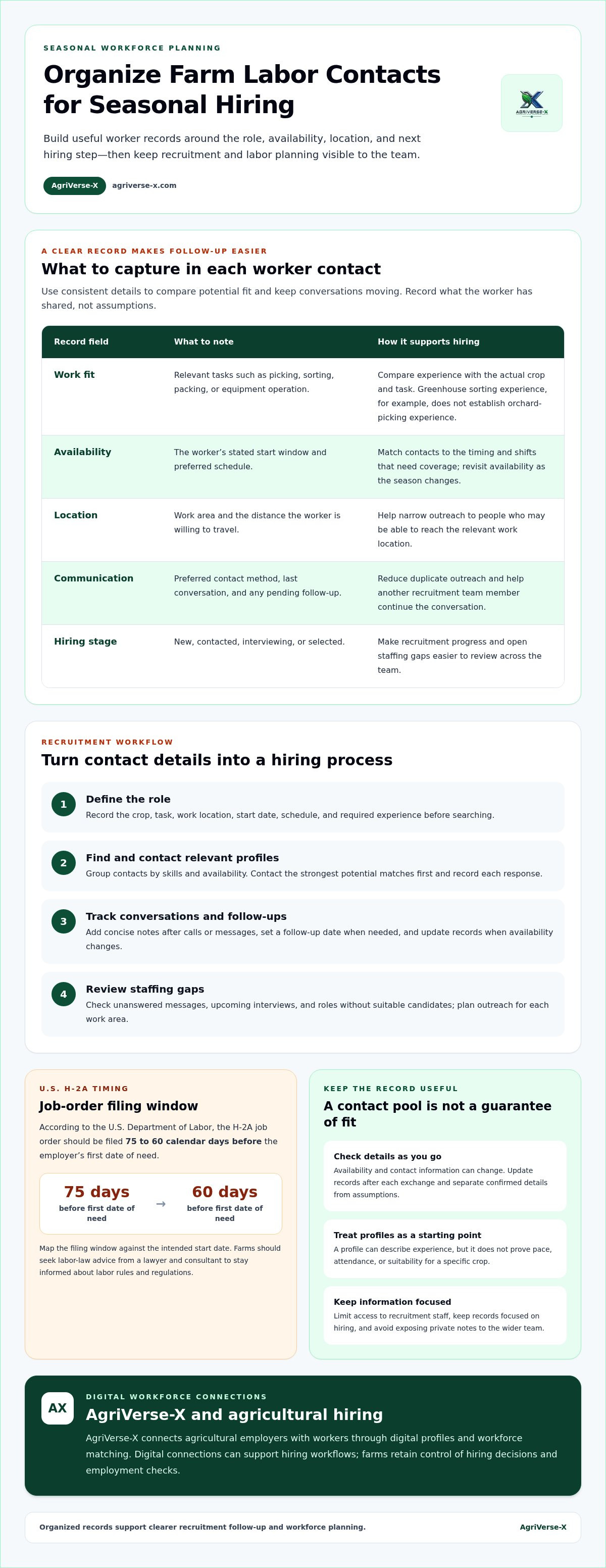
Useful contact records capture practical details that support each next step:
- Work fit: Note relevant tasks, such as picking, sorting, packing, or equipment operation.
- Availability: Record the worker’s stated start window and preferred schedule.
- Location: Include the work area or the distance a worker is willing to travel.
- Communication: Save the preferred contact method and the date of the last conversation.
- Hiring stage: Mark whether the person is new, contacted, interviewing, or selected.
Use these details to create a seasonal recruitment workflow. A farm preparing for apple harvest, for example, can group contacts by picking experience and availability. The manager can contact the strongest matches first, record responses, and schedule interviews. If a worker declines, update the record and move to the next suitable contact. This keeps recruitment visible to the hiring team instead of leaving status updates in one person’s inbox.
Timing matters for H-2A recruitment. According to the U.S. Department of Labor, the H-2A job order should be filed 75 to 60 calendar days before the employer's first date of need. The identifier 2A points to the H-2A program. Farms considering this route should map the job-order timeline against the intended start date, then organize related contacts and hiring tasks around those milestones.
Contact records should support communication, not just store information. After each call or message, add a brief note, such as “available for morning picking” or “requested interview details.” Set a follow-up date when a response is pending. For a crew lead coordinating several applicants, these notes help prevent duplicate outreach and keep conversations consistent. Restrict access to staff involved in recruitment, and keep records focused on hiring.
Review contacts as the season changes. Someone unavailable during early planting may be ready for later harvest work. Update availability after responses and separate current contacts from inactive records. A weekly review can flag unanswered messages, upcoming interviews, and roles without suitable candidates. Managers can then adjust outreach in time to plan shifts, supervision, and task assignments.
Connect recruitment records to labor planning. Compare interested workers with the tasks, locations, and dates that need coverage. If a farm needs pickers for two separate blocks, label each work area and track responses for both. This gives managers a clearer view of staffing gaps and helps them plan outreach, interviews, and onboarding before harvest begins.
Keep records current by revisiting them after each exchange and correcting outdated availability or contact preferences. Separate confirmed details from assumptions so follow-up reflects what the worker actually shared. Limit access to recruitment staff and avoid exposing private notes to the wider team. A concise record of the last discussion helps another manager continue the conversation without asking the worker to repeat information. Review open follow-ups as staffing needs change, and close records when they are no longer useful. Good organization makes contact management more consistent across the hiring team.
Michigan State University Extension recommends that farms seek labor-law advice from a lawyer and consultant to stay informed about labor rules and regulations. The average number of tracked professional contacts per matched farm labor management software company was 12.1 as of October 1, 2026. Keeping professional contacts alongside worker records can help managers coordinate questions and follow-up, while preserving a clear distinction between potential employees and other useful contacts.
What are the risks and limitations of using farm labor sourcing platforms?
A farm labor sourcing platform can widen access to worker contacts, but a larger pool doesn’t guarantee a suitable match. A profile may mention picking experience without showing pace, attendance, or fit for a specific crop. For example, experience sorting greenhouse produce doesn’t establish orchard-picking experience. Treat each profile as a starting point, not proof of performance.
Contact records can become outdated. A worker may change availability after accepting another role, or an old phone number may leave a manager unable to reach them. Before scheduling an interview, confirm current contact details, location, preferred tasks, and start window. Record when the details were confirmed so the team can distinguish current information from older entries.
Handle personal information carefully. Recruitment records may include phone numbers, work history, availability, and other details workers share during hiring. Limit access to recruitment staff, use individual accounts where available, and remove information that no longer serves a hiring purpose. A seasonal supervisor, for example, may need interview status but not every internal note about an applicant.
Before relying on a match, review the information that affects the actual job:
- Task fit: Compare listed experience with the crop and work involved.
- Availability: Confirm start timing, shift preferences, and current commitments.
- Location: Check whether the worker can reach the farm or work site.
- Communication: Confirm that contact details work and messages receive replies.
- Work expectations: Explain duties, schedule, supervision, and reporting arrangements.
- Hiring status: Record interviews, decisions, and follow-up actions consistently.
A digital match doesn’t replace the farm’s screening process. Managers still need to discuss the role, consider relevant experience, and explain working conditions. A berry farm, for example, can ask about previous picking tasks and explain how the crew reports each day. Keep selection notes job-related and consistent across applicants. This supports comparable decisions instead of relying on profile tags alone.
Temporary employment services create another point to assess. Michigan State University Extension advises farms using temporary employment services to ensure the service is a licensed farm labor contractor. Farms should understand who recruits workers, who employs them, and who manages day-to-day communication. For a practical example of digital workforce connections, review AgriVerse-X’s agricultural workforce network, while keeping hiring checks and employment responsibilities clear.
Access to digital platforms can vary across a workforce. A worker may have limited internet access, share a phone, or prefer a direct conversation. Offer a non-digital way to discuss the job, and don’t treat difficulty using an online profile as evidence of poor work ability. Managers should also know who updates records and how the team handles changes when connectivity is unavailable.
Software won’t resolve every staffing constraint. A farm may find suitable workers but still need to coordinate transport, supervision, training, and task timing. Map those operational needs alongside recruitment. After each hiring cycle, review missed follow-ups, unclear role descriptions, and outdated contact records. Adjust the workflow before the next hiring period.
AgriVerse-X: AgriVerse‑X enables farmers, agribusinesses, cooperatives, and service providers to create verified digital profiles showcasing products, services, skills, and certifications. The platform supports marketplaces for agricultural goods, inputs, machinery, technology, and services, including drones, irrigation, logistics, processing, packaging, and value‑addition. Employers can connect with agricultural workers, while training providers may offer courses in farming, technology, safety, and business skills. AgriVerse‑X also lists farmland, leases, storage, and equipment rentals. Financial partners may offer approved agricultural finance programmes. The platform supports digital traceability records and compliance‑aligned reporting. AVX, the platform’s BEP‑20 utility token, may be used for verified participation incentives but does not guarantee income or investment returns.
AgriVerse-X connects agricultural employers with workers through its platform, which supports verified digital profiles for farmers, agribusinesses, cooperatives, and service providers. For farms planning seasonal recruitment, worker connections sit alongside profiles that showcase relevant skills and certifications, helping participants present their capabilities clearly.
Employers can turn to AgriVerse-X when they want to make workforce connections within a broader agricultural network. Training providers may also offer courses in farming, technology, safety, and business skills, supporting workforce development alongside recruitment. Services and availability can depend on local requirements and programme arrangements.
Use these digital connections to support recruitment planning, while continuing to manage interviews, role expectations, and hiring decisions through your own processes. Visit AgriVerse-X to learn more about connecting agricultural participants.
Turn workforce planning into a repeatable process
Build each hiring cycle around clear roles, timely outreach, and consistent follow-up. Treat recruitment as an operating process, not a last-minute response to an approaching harvest. A farm labor sourcing platform can support that process by helping employers connect with workers, while farm managers remain responsible for role details, hiring decisions, and day-to-day coordination.
Choose a practical next step: identify the work that needs coverage, define the required skills, and decide how your team will manage applicant communication. Then connect that plan to digital workforce tools suited to your operation. AgriVerse-X brings agricultural employers and workers into a shared digital environment, supporting connections across the sector.
Explore whether this approach fits your workforce needs. Contact AgriVerse-X about farm labor sourcing and take a clear next step toward more structured recruitment.
Frequently Asked Questions
How can farms use a platform to recruit and hire seasonal agricultural workers?
Farms can use a farm labor sourcing platform to connect with potential seasonal workers and organize recruitment around crop demand. For example, a greenhouse operator preparing staggered tomato harvests can separate roles into picking, sorting, and packing, then match candidates to each task. Managers can review relevant profiles, contact applicants, arrange interviews, explain schedules and duties, and record selections. The employer then completes its hiring and onboarding process, including clear supervision and work expectations.
How do farm labor platforms compare on features, coverage, and worker verification?
Compare platforms by how they organize worker information, support matching, and enable communication. AgriVerse-X offers verified digital profiles that can showcase workers’ skills and certifications, but the material gives no comparative coverage details.


