

A farm listing earns serious attention through clarity, not acreage alone. A useful farm property listing online helps prospective growers understand the land, its practical features, and whether it may suit their operation. It also sets realistic expectations before anyone makes an inquiry. Online interest, however, isn’t proof of ownership or a completed lease.
If you’re unsure which details to include or how to describe the property accurately, start with information that helps an agricultural operator assess the opportunity. This guide shows you how to prepare a clear listing, present the land in decision-useful terms, and connect with people whose needs may fit the property.
You’ll learn what to cover, how to make the opportunity easier to understand, and which checks belong beyond the listing. AgriVerse-X is designed to support discovery by connecting landowners with growers and commercial farming operators. Property information remains subject to local verification, so treat an online listing as the start of a conversation, not a substitute for due diligence.
Key Takeaways
- A strong farm property listing online helps agricultural users assess whether the opportunity fits their needs.
- Present location, land area, current use, access, and infrastructure clearly, and distinguish known facts from estimates or unverified claims.
- Choose a listing route based on the audience you want to reach, while treating discovery and ownership verification as separate steps.
- Manage the process deliberately: prepare accurate information, submit it through the chosen channel, review inquiries, and continue local due diligence.
- AgriVerse-X is designed to connect landowners with qualified growers and commercial farming operators, while property details remain subject to local verification.
Why list farm property online when you want to reach agricultural tenants?
Land that isn’t being used may represent an opportunity for a grower, cooperative, or commercial operator looking for space to farm. A well-prepared online listing gives that opportunity a clear, accessible presentation, helping potential agricultural users discover it and decide whether to make an inquiry. It can widen discovery beyond an owner’s immediate network, but it doesn’t guarantee a tenant or make the land suitable for every operation.
An online farm property listing is a structured presentation of agricultural land that helps potential users discover and assess an opportunity. It brings the basic picture into focus: what the land is being offered for, where it is, and what kind of arrangement the owner is considering. Clear information helps people assess fit before investing time in a conversation.
A grower seeking a small area for seasonal crops may have different needs from a commercial operator planning a larger or longer-term enterprise. Access, current use, available infrastructure, and the proposed arrangement can all affect whether an opportunity is worth exploring. An effective listing makes these distinctions easier to understand rather than presenting every parcel as interchangeable.
Farm land is a distinct property context, and the relationship between an owner and a tenant can involve different types of agreements. A general overview of farm land as a real estate niche can help frame why agricultural property needs more context than a simple land description. The listing should invite an informed conversation, not imply that an inquiry settles the terms.
Who can benefit from listing agricultural land online?
Landowners can use a listing to make an available opportunity easier for agricultural users to find. Cooperatives or authorised representatives may use online discovery to communicate land opportunities to their networks, while growers and commercial operators can use listings to identify property that may suit their plans.
Fit depends on the operation and the land. A parcel suited to one growing approach may not meet another operator’s needs, and the proposed lease or use arrangement matters too. Describe the opportunity accurately so interested parties can judge whether to take the next step.
What an online listing can, and cannot, do
A listing can explain that land is available for an agricultural opportunity and invite relevant inquiries. AgriVerse-X is designed to support discovery by connecting landowners with qualified growers and commercial farming operators. An inquiry or expression of interest is only a starting point, not confirmation that a prospective tenant is suitable.
Discovery online doesn’t independently establish ownership or land title, verify every property detail, or complete a lease. Land and tenancy requirements vary by jurisdiction. Owners and prospective tenants should arrange appropriate local verification and due diligence with relevant professionals before relying on property claims or finalising an agreement.
Prepare a farm property listing online with clear, decision-useful details
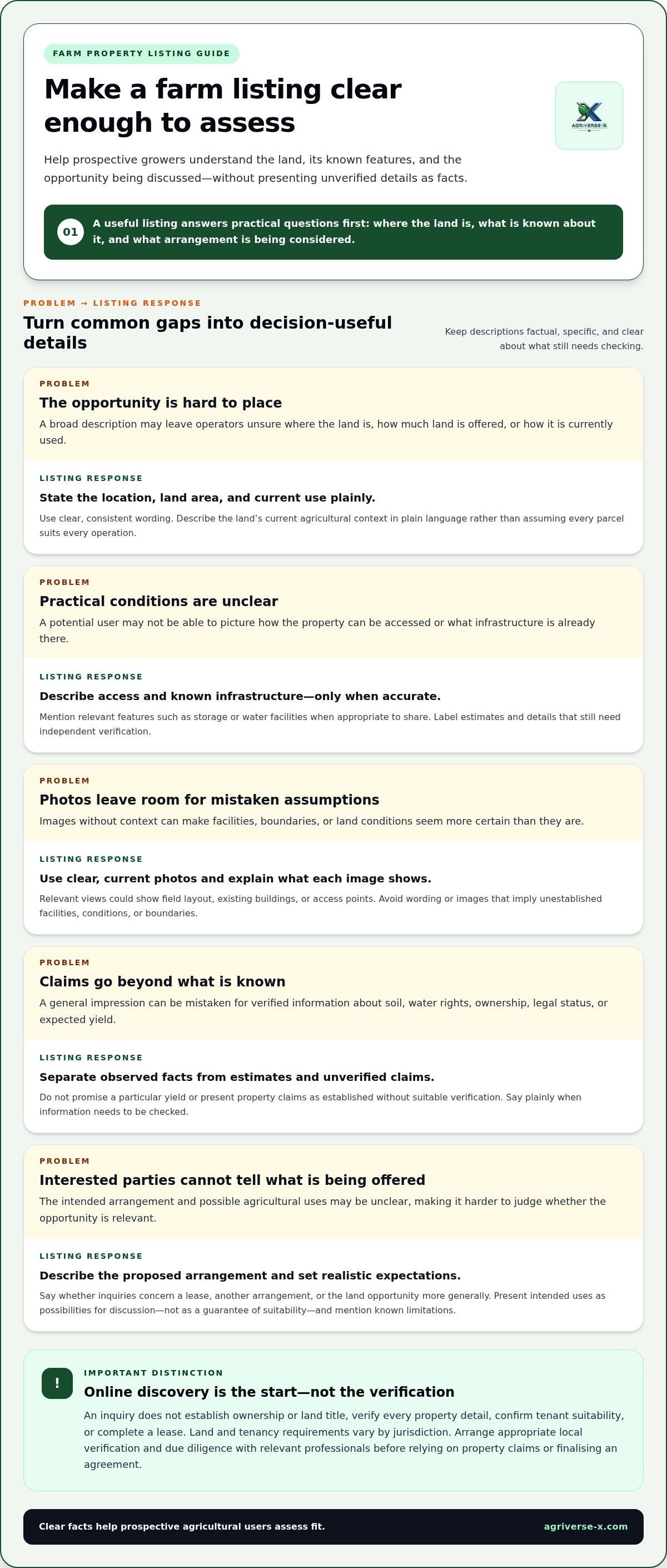
A useful farm property listing online gives prospective growers enough accurate information to judge whether an opportunity may fit their operation. Start with the basics: the property’s location, land area, current use, access, and known infrastructure. State what you know plainly, and separate direct observations from estimates, future plans, or details that require independent verification.
A farm listing should communicate the location, land area, current use, access, known infrastructure, and proposed arrangement, while clearly distinguishing confirmed facts from estimates and unverified claims.
Make the property easier to picture with clear, current photos that show relevant features, such as field layout, existing buildings, or access points. Pair them with a concise description that explains what each image shows. Avoid using images or wording that could suggest facilities, conditions, or boundaries that aren’t established.
Describe the land and its agricultural context
Use plain language to describe how the land is currently used and what physical characteristics a visitor would see. If you know the area, state it clearly and consistently. Note access routes and existing farm infrastructure, such as storage or water facilities, only when those details are accurate and appropriate to share.
Be precise about the limits of your knowledge. Don’t present a general impression as a soil assessment, promise a particular yield, or make claims about water rights, ownership, or legal status without suitable verification. If a detail is an estimate or needs checking, label it that way instead of presenting it as established fact.
People exploring farmland access may be weighing different routes, including leasing and purchasing. Farmland Access resources offer information about these approaches, which can help owners describe the kind of opportunity they intend to discuss without assuming every arrangement suits every operator.
Set out the opportunity and expectations
State whether you’re inviting inquiries about a lease, another arrangement, or the land opportunity more generally. Describe intended agricultural uses as possibilities under discussion, not as a guarantee that the property will suit a specific crop, livestock system, or business plan. Mention known limitations that may affect an operator’s assessment.
Set a clear, factual tone for inquiries. Explain what information you can discuss and avoid implying that an expression of interest confirms tenant suitability or settles terms. A prospective operator will need to assess the opportunity, and land-related requirements vary by jurisdiction.
Before publishing, review every statement and image for accuracy and permission to share. A disciplined description helps readers ask relevant questions and gives both parties a more useful starting point for local verification and professional due diligence.
Compare online farm listing routes without confusing reach with verification
The right channel depends on who you want to reach and how you want to present the opportunity. A broad property marketplace can put rural land before people browsing different property types. Direct outreach can focus on people or organisations already in your network. An agriculture-focused platform is designed around farm and land opportunities, making its context relevant to growers and commercial operators. None guarantees leads or replaces local checks.
Choose a listing route that fits the opportunity
Match the channel to the property and intended audience. A broad rural-property listing may suit land that could interest varied users, while agricultural marketplaces are relevant when you want growers or farm operators to discover a land opportunity. Direct outreach can complement online discovery by sharing information with known agricultural contacts. Compare purpose and audience, not assumed performance.
| Route | Likely audience | Listing context | Discovery approach | What remains for owner-led verification |
|---|---|---|---|---|
| Broad property marketplace | People browsing different types of rural property | General land or rural-property opportunity | Search and browse property categories | Confirm ownership, property details, land-use conditions, and proposed terms locally |
| Direct outreach | People or organisations in the owner’s existing network | Opportunity shared with selected contacts | Personal communication and referrals | Check each inquiry, establish suitability, and verify the property and agreement |
| Agriculture-focused opportunity platform | Growers and commercial farming operators seeking agricultural opportunities | Farm or land opportunity, including a possible lease | Discovery in an agricultural context | Verify title, land details, proposed use, tenant suitability, and local requirements |
Understand what discovery platforms leave to due diligence
A listing communicates information supplied about an opportunity; search access doesn’t authenticate it. Visibility cannot establish land title, prove a person’s authority to offer the property, confirm tenant qualifications, or guarantee that the land suits a proposed operation. Treat every inquiry as a reason to discuss the opportunity, not as evidence that a transaction is secure or complete.
Before progressing, the parties need to assess the property, intended use, proposed terms, and requirements that apply locally. Ownership and land-use questions should be addressed through appropriate local verification and professional due diligence. An online presentation can support discovery, but it cannot replace those checks.
AgriVerse-X’s farm and land opportunity approach is designed to connect landowners with qualified growers and commercial farming operators. Explore this agricultural discovery option as one route for presenting an opportunity, with property information remaining subject to local verification.
Publish and manage a farm property listing online step by step
A clear publishing process helps keep the opportunity accurate from first draft through follow-up. Treat a farm property listing online as the start of discovery, then manage each inquiry and verification step separately. Share only information you’re authorised to provide, and keep a record of what you publish and discuss.
- Assemble the facts. Gather the location, land area, current use, access details, known infrastructure, and any supporting information you’re permitted to share. Mark estimates clearly and set aside claims that need independent verification.
- Describe the opportunity. State whether you’re inviting lease inquiries, discussing another arrangement, or seeking general interest. Explain the intended agricultural use and any known limitations without promising that the land will suit a particular operation.
- Submit the listing. Use the selected platform’s process and review the text and materials before sending them. Check that descriptions are accurate, images and documents are appropriate to share, and no private information is exposed unnecessarily.
- Review inquiries. Compare each person’s stated plans with the opportunity’s described use, access, and proposed terms. Invite prospective operators to explain their intended activity and relevant operating needs.
- Continue local checks. Keep online interest separate from property verification, tenant assessment, and any agreement. Record questions, responses, documents discussed, and the next steps agreed by the parties.
Review inquiries and assess fit
Read each inquiry against the opportunity as described, not against assumptions about who might be interested. A prospective operator’s explanation of their intended use can help identify questions about access, infrastructure, or proposed terms. A profile, platform record, or expression of interest isn’t proof of qualifications or suitability, so assess the information through appropriate independent checks.
Move from online interest to local due diligence
Before relying on property details or progressing an arrangement, the parties should verify relevant land information through appropriate local processes. Land, lease, and employment requirements vary by jurisdiction, so seek advice from suitable local professionals. Have proposed lease terms and required documentation reviewed by qualified professionals. An online listing invites discussion; it doesn’t create, approve, or replace a lease agreement.
Keep a simple inquiry record: the date, questions raised, information provided, documents shared, and any follow-up agreed. This makes conversations easier to track and helps distinguish confirmed facts from statements still being checked. Share additional material only when you have permission and it’s appropriate for the discussion.
AgriVerse-X provides farm and land opportunity information designed to connect landowners with growers and commercial farming operators, with property information subject to local verification. Explore AgriVerse-X’s farm and land opportunity approach as you plan how to present and manage an opportunity responsibly.
Use AgriVerse-X to connect farm property listings with agricultural operators
A farm property listing online can do more than announce that land is available. In an agriculture-focused marketplace, it can help put a land opportunity in front of growers and commercial farming operators who are looking for agricultural land. AgriVerse-X is designed to support the listing, discovery, and leasing of agricultural land, connecting landowners with qualified agricultural participants.
The value is in creating a relevant discovery and connection layer. A grower can consider whether an opportunity’s stated location, use, access, and arrangement might fit their operation, while a landowner can receive inquiries from people interested in agricultural use. This helps start a focused conversation, but it doesn’t establish ownership, verify title, or confirm that a particular operator is suitable.
How the agricultural marketplace supports land discovery
A farm opportunity sits within a wider agricultural context. For example, a grower exploring land for crop production may want to understand the current use and access, while a commercial operator may have different requirements and questions. Structured property information helps each person assess whether to inquire. AgriVerse-X is intended to connect these participants through farm and land opportunity information, not to replace independent checks.
Keep the distinction clear: marketplace discovery introduces an opportunity; it doesn’t certify property claims or guarantee a transaction. Land and lease requirements vary by location, and details remain subject to local verification. Service availability and commercial terms may change as the platform develops, so treat any listing as a starting point for discussion and appropriate due diligence.
Take the next step as a landowner
Prepare accurate property information before presenting an opportunity. Use clear descriptions, identify what is known versus what needs verification, and state the kind of agricultural arrangement you want to discuss. This gives prospective operators a more useful basis for deciding whether to make an inquiry.
Then consider whether AgriVerse-X’s agricultural marketplace fits your discovery goals. Its farm and land opportunity information is designed to connect landowners with growers and commercial farming operators, while ownership, title, tenant suitability, lease terms, and local requirements remain matters for separate verification.
Explore the AgriVerse-X farm and land opportunity platform to learn more about its approach to agricultural land discovery. An online listing can help open a conversation, but it doesn’t promise a tenant match, a completed lease, or a financial outcome. Carry the process forward with accurate information and appropriate local professional due diligence.
Turn a clear land opportunity into your next conversation
Publishing is a practical first move, not the finish line. A well-prepared farm property listing online gives agricultural operators a clearer basis for deciding whether to inquire, while leaving room for both sides to confirm details and discuss workable terms. Keep your information current, distinguish established facts from details still being checked, and approach each inquiry as the beginning of a careful process.
AgriVerse-X’s dedicated marketplace is designed to support the listing, discovery, and leasing of agricultural land, connecting farmland owners with qualified growers and commercial farming operators. Property information remains subject to local verification, and an online connection doesn’t establish ownership, confirm suitability, or complete a lease. Take the next step with accurate information and appropriate local due diligence.
Explore AgriVerse-X farm and land opportunities and consider how your land opportunity can reach agricultural participants. A clear, responsible presentation creates a stronger starting point for informed conversations. Move forward with confidence, one well-grounded step at a time.
Frequently Asked Questions
Does listing farm property online verify ownership or land title?
No. Treat ownership statements in an advert as information to check, not as supporting evidence by themselves. As a prospective grower, ask which documents or records are available for review and whether the person communicating can act for the landowner. Compare details consistently and have relevant documents assessed through appropriate local channels before making commitments. The exact checks depend on the property and jurisdiction.
Can farmland be listed online for lease rather than sale?
Yes. Make the intended arrangement unmistakable in the listing so readers don’t mistake a lease opportunity for a sale. If known, explain which portion of the land is being offered, the type of agricultural use under discussion, and any proposed access or infrastructure arrangements. Keep proposed terms distinct from agreed terms. This helps a reader decide what to ask before investing time in a detailed conversation.
Are online farm property listings useful for smallholders as well as commercial operators?
They can serve people operating at different scales if the land opportunity is described in a way that lets them assess practical fit. A smallholder might focus on whether the area and access work for their planned activity, while a larger operator may consider how the parcel fits into existing operations. Owners can make the opportunity easier to assess by explaining what is offered, rather than assuming a particular scale of operation.
Can an online listing guarantee that a farm will find a tenant?
No. A listing can’t promise that anyone will inquire or that an interested person will become a tenant. Plan for different responses: some readers may need more information, while others may not be a match. Set a consistent way to record inquiries and follow up, and avoid making operational or financial plans on the assumption that a lease will result from publication.
Should I include exact farm boundaries in a public listing?
Only share boundary details you’re authorised to publish and consider whether the public needs that level of precision to understand the opportunity. A general location may be enough for an initial description. Keep detailed maps or documents for an appropriate stage of discussion, and make sure any material shared is accurate and suitable for its intended audience. Don’t use an informal map as a substitute for formal property records.
What should a prospective grower verify before pursuing a listed farm?
Start by defining your own operating requirements, then compare them with the opportunity rather than relying on broad claims such as “ideal for farming.” Consider the proposed activity, the land area you need, access for people and equipment, and any infrastructure essential to your plan. Write down unanswered questions before speaking with the landowner. This helps keep the conversation focused on the details that matter to your operation.
Does an online farm listing create a lease agreement?
No. A listing is an invitation to discuss an opportunity, not the written record of an agreed arrangement. If discussions progress, capture the points the parties believe they have settled and identify anything still open. Have the proposed document prepared or reviewed by an appropriate local professional, who can account for the requirements that apply in that jurisdiction. Don’t treat messages or listing text as a substitute for that process.


