

A low price doesn’t make a bulk offer the right fit if the product, quantity, or delivery terms don’t match your needs. A honey beans bulk order starts with a clear buyer brief, so you and the supplier can compare the same requirements from the start.
Bulk listings can be difficult to compare when descriptions leave important details open to interpretation. Before reviewing offers, define the intended use, required quantity, product description, packaging expectations, delivery destination, and timing. Then compare each offer against the same criteria and record the agreed terms clearly.
This checklist helps you turn expected demand into a practical order brief, assess offers consistently, and reduce the risk of receiving beans that don’t match your written requirements. You’ll also see how AgriVerse-X’s agricultural marketplace provides a digital route to discover agricultural products and connect with buyers and suppliers. Start with the details that matter to your operation, clarify differences between offers, and prepare an order both sides can understand.
Key Takeaways
- Define the intended use, quantity, delivery needs, and acceptance criteria before comparing offers.
- For a honey beans bulk order, separate essential requirements from preferences so the brief is clear and practical.
- Compare every offer against the same requirements. Record missing details as unanswered questions rather than assumed defects.
- Before submitting, confirm the quantity and unit, destination, timing, and acceptance criteria in the written order terms.
- Use the AgriVerse-X agricultural marketplace as a digital route to discover agricultural products and connect with buyers and suppliers.
Why a Honey Beans Bulk Order Needs a Clear Buyer Brief
Before comparing offers, define the intended use, required quantity, delivery needs, and acceptance criteria. These details help suppliers understand the request and give you a consistent basis for assessing what each offer includes. Without them, two listings that look similar may leave important differences unresolved.
A household buying beans for regular meals has different demand from a retailer replenishing stock, a food-service business planning menus, or a distributor supplying multiple customers. There’s no single order size that makes a purchase “bulk” for every buyer. The right quantity depends on how you’ll use, store, and move the beans.
A useful bulk-order brief states what the beans are for, how much is needed, where and when they must arrive, and what conditions the delivery must meet.
Honey beans belong to the broader cowpea category. For background on the crop, see Cowpea (Vigna unguiculata). For purchasing, focus on the description and requirements that matter to your operation, then put them in writing.
Match the order to your operation
Estimate demand using normal sales, planned distribution, or menu requirements rather than choosing a quantity simply because an offer is labelled bulk. Separate stock needed for the current cycle from possible future reorders. Then consider available storage space and how quickly stock is likely to turn over. This helps align the requested volume with actual operating needs.
For a retailer, review recent stock movement and expected replenishment needs. A food-service buyer can estimate use from planned menus and existing purchasing records. A distributor may need to account for the quantities required by the customers they serve. These checks help you build a request from your own demand rather than from an unclear idea of what a bulk order should be.
Define what “bulk” means for your purchase
State the required amount and unit clearly so the buyer and supplier interpret the quantity in the same way. Avoid relying on an undefined term such as “large order.” If you have a preferred quantity range, state it separately from the amount you need. This describes your requirements without assuming a universal threshold, fixed minimum order, or standard pack size.
A written brief also makes comparison more disciplined. Use the same product description, quantity, destination, timing, and acceptance conditions when reviewing each offer. Compare details that are actually stated; note omissions as questions to resolve rather than treating them as proof of a problem.
- Required: conditions the order must meet, such as the quantity needed or delivery destination.
- Preferred: options that would suit your operation but aren’t essential to accepting the order.
Keep these categories distinct. If a preference later becomes essential, update the brief before comparing offers. A clear honey beans bulk order brief gives the buyer and supplier a shared reference for discussing the product, delivery, and agreed expectations. It also helps prevent assumptions from becoming part of the order.
What to Specify in a Honey Beans Bulk Order
Build the order brief in a consistent sequence so every offer responds to the same request. State what you need, how much you need, which product attributes matter, where and when delivery is required, and how you’ll decide whether the order meets your expectations. For a honey beans bulk order, clear language is more useful than assumptions about what a listing’s terms mean.
Clear quantity units and a specific product description give buyers and suppliers the same reference for what is being requested.
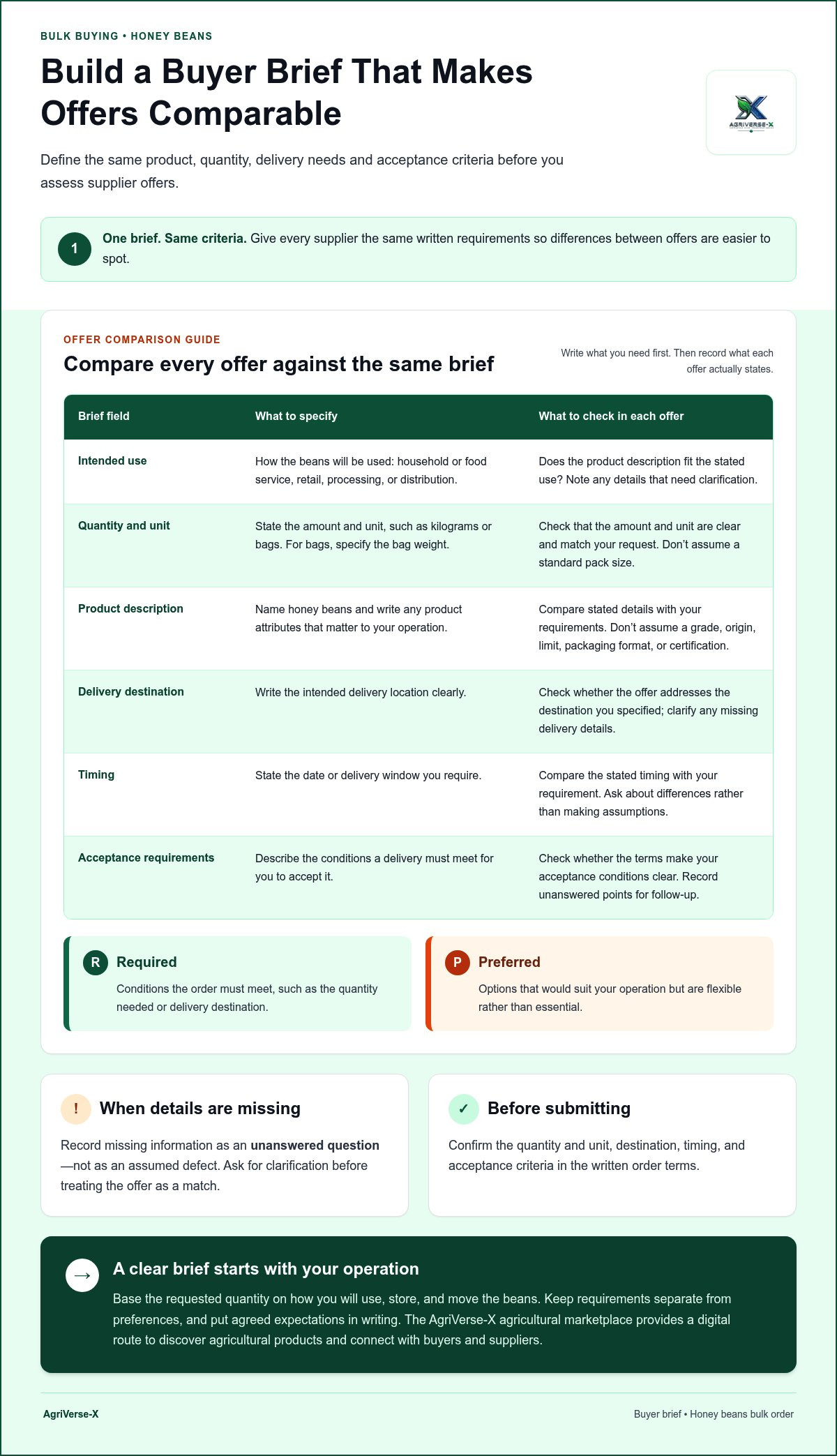
- Intended use: Explain whether the beans are for household or food-service use, retail, processing, or distribution.
- Quantity and unit: State the amount and unit, such as kilograms or bags. If you specify bags, define the bag weight rather than assuming it.
- Product description: Identify the product as honey beans and record any attributes that matter to your use.
- Delivery destination: Write the intended delivery location clearly.
- Timing: State the date or delivery window you require.
- Acceptance requirements: Describe the conditions the delivery must meet for you to accept it.
Separate requirements from preferences. A requirement is essential to the purchase; a preference is desirable but flexible. This distinction helps suppliers respond accurately and gives you a fair way to compare offers without turning an optional request into an unstated condition.
Describe the product and intended use
Name honey beans directly and describe how your business intends to use them. If particular product attributes matter, write them as specific requests instead of relying on a general label. Don’t assume a grade, origin, moisture limit, packaging format, or certification requirement. Include technical thresholds only when you have a defined need and can state it clearly in the brief.
Consider what information would help your team make a receiving decision. For example, if the type of packaging affects storage or handling, describe the format you need. If your business has a written product specification, refer to the relevant requirements in the order brief. Avoid vague phrases such as “good quality” when you can state the actual condition you expect.
Make quantity, timing, and delivery expectations explicit
Use one consistent unit across the order brief and every offer you compare. Record the destination and required timing in plain terms, then distinguish firm needs from preferred arrangements. Don’t assume a particular pack format, shipping availability, or lead time unless it’s stated in the offer. If an offer leaves a point unanswered, record it for clarification rather than filling the gap with an assumption.
Before sending the request, read it as if you were receiving it for the first time. Could someone identify the product, measure the requested amount, understand the destination and timing, and see what acceptance depends on? Revise any phrase that could reasonably be interpreted in more than one way. A well-structured brief makes the conversation more efficient and supports clearer written order terms.
AgriVerse-X distributes bulk honey beans and supports an agricultural marketplace that connects buyers with agricultural products and participants. Use your completed brief as a practical starting point for exploring those buyer connections.
How to Compare Bulk Honey Beans Offers Fairly
Use the same buyer brief to assess every offer. Compare what each one says about the product, quantity, fulfilment terms, and fit with your requirements. This keeps a clear distinction between information that is provided and details that still need clarification.
Set up a comparison table with one row for each important requirement and these three columns:
- Buyer requirement: Record the condition you need, such as a stated quantity unit or delivery destination.
- Offer detail: Copy the relevant information from the offer without adding assumptions.
- Unresolved question: Note anything that is absent, unclear, or needs discussion.
For example, a row could show your required quantity and unit, the quantity and unit stated in the offer, and any difference that needs resolving. This makes it easier to spot whether the offer matches your request without relying on memory or comparing different details from different listings.
Mark missing details as unanswered, not as a defect. An offer that doesn’t state a particular detail hasn’t necessarily failed your requirement; the comparison simply shows that you don’t yet have enough information to assess that point.
Don’t use the lowest quoted amount alone to decide which offer fits best. A useful comparison considers whether the product description, quantity, fulfilment terms, and other stated conditions align with your priorities. For a honey beans bulk order, the right fit is the offer that best matches the buyer’s brief based on the information available and clarified terms.
Compare product information and order terms
Check whether each offer identifies honey beans clearly and states quantity using a unit you can compare with your request. Review packaging, delivery, and timing details only when the offer actually provides them. Before scoring fit, label each item in your brief as mandatory or preferred. This prevents a flexible preference from outweighing a requirement your operation depends on.
For example, if one offer states a quantity in bags but doesn’t give the weight per bag, record that as an unresolved question. Don’t convert it to another unit or assume a pack format. Apply the same approach to delivery terms: compare the information stated, and keep unstated shipping availability or lead times open rather than treating them as commitments.
When offers use different units, convert quantities only if the information needed for a reliable comparison is provided. Record the original unit as well as any conversion, so the basis for your comparison stays clear. If the quantity cannot be compared from the information available, leave it unresolved rather than treating the amounts as equivalent.
Assess confidence without assuming certifications
Look for consistent product descriptions and written order terms that address your stated requirements. If wording is unclear or a required detail is missing, record the point for resolution through the normal purchasing process. Photographs and promotional phrases can support a listing, but they don’t establish product quality, safety, or certification on their own.
Once you’ve filled the comparison columns, review the unresolved questions before making a decision. This makes gaps visible without turning them into claims about an offer. AgriVerse-X distributes bulk honey beans and supports an agricultural marketplace connecting buyers with agricultural products and participants. Buyers can use the agricultural marketplace as a digital route for product discovery and buyer connections.
Use This Checklist Before You Submit a Bulk Honey Beans Order
A final review turns a prepared request into an order both sides can understand. Confirm your demand, check the completed brief, compare the available offers, then review the written terms before submitting. This sequence helps catch mismatches while there’s still time to resolve them.
Run a final order-readiness review
Read the order details from top to bottom. The product description and intended use should match throughout, and the quantity should use the same clear unit wherever it appears. Confirm that the destination and required timing are written down, not left to assumption. If a term is incomplete or conflicts with another part of the order, resolve it before treating the brief as final.
- Demand: Does the requested amount match your current operating need?
- Quantity and unit: Is the quantity stated consistently and clearly?
- Product and use: Do the description and intended use match your request?
- Destination and timing: Are the delivery location and required timing recorded?
- Acceptance criteria: Are the conditions for receiving the order clear?
Plan for receiving and managing the order
Before submission, consider where the order will be stored and how it fits your planned use. Assign a responsible person to compare what arrives with the agreed written description and order terms. Keep the request, offer, final terms, and receiving record together so purchasing and inventory staff can refer to the same information.
Use a clear written record as the shared reference point. It should capture the agreed product description, quantity and unit, destination, timing, and acceptance criteria, along with any other terms both sides have accepted. If those details change during discussion, update the record and make sure both buyer and seller are working from the same version. This simple discipline can prevent an early misunderstanding from carrying through to receipt.
Once the checklist is complete, submit the order with confidence in the clarity of your instructions, not on assumptions about unspoken details. A well-prepared honey beans bulk order gives each party a practical basis for confirming what was requested and agreed.
AgriVerse-X distributes bulk honey beans and supports an agricultural marketplace that connects buyers with agricultural products and participants. Explore AgriVerse-X for agricultural marketplace connections.
Source Honey Beans Through the AgriVerse-X Agricultural Marketplace
AgriVerse-X distributes bulk honey beans and supports an agricultural marketplace that connects buyers with agricultural products and participants. For buyers, this offers a digital route to explore product opportunities and start a purchasing conversation with a clearer understanding of the business’s needs.
Use product discovery as the start of sourcing, then base a purchase decision on the details stated in the relevant offer and the terms agreed for your order. The marketplace connects participants; it doesn’t guarantee availability, delivery, or a particular order outcome.
Connect a defined requirement with product discovery
Bring your order brief into the search process. A clear description of intended use, quantity and unit, destination, timing, and acceptance requirements gives you a practical framework for assessing relevant agricultural product opportunities. It also helps focus the purchasing conversation on your actual needs, rather than on assumptions about unspecified product details or fulfilment arrangements.
As you review marketplace information, use the brief to organise what you learn. Note which stated details align with your requirements and which points remain open. This turns product discovery into a more purposeful sourcing step, whether you’re buying for regular retail, food service, or distribution. Keep the distinction between stated information and unanswered questions clear.
- Product fit: Does the offer identify honey beans and describe the product in terms relevant to your intended use?
- Order fit: Can you compare the stated quantity and unit with the amount you require?
- Purchasing details: Are delivery and other fulfilment terms included in writing, or do they remain open?
Keep purchasing decisions grounded in stated terms
Compare each written offer with your own requirements, not with assumptions drawn from photographs, promotional wording, or details that an offer doesn’t state. Keep a record of the terms you and the seller agree on, including any clarified points. This makes the purchasing basis easier to refer to as the order moves from discussion to submission.
AgriVerse-X brings agricultural products and buyer connections into a marketplace, while also distributing bulk honey beans. It provides a route for product discovery and sourcing conversations, not a guarantee of transaction results. Buyers remain responsible for deciding whether the stated terms suit their needs.
If you’re preparing a request, use your brief to guide the next conversation. If you’re still exploring, explore AgriVerse-X and review relevant agricultural marketplace connections.
Make Your Next Sourcing Step Count
Turn your order brief into a practical reference for future purchasing cycles. After this honey beans bulk order, note which requirements were essential, where the written terms needed clarification, and whether the quantity aligned with actual use. That record can help your team prepare more consistently next time without assuming every order will follow the same pattern.
Keep the process adaptable. Demand, storage capacity, and delivery needs can shift, so revisit your requirements before each new purchase rather than relying on an old brief unchanged. Clear records give colleagues a shared starting point and help keep expectations aligned as purchasing responsibilities change.
Ready to take the next step in sourcing? Explore AgriVerse-X and its agricultural marketplace to review relevant agricultural connections. Build your next purchasing conversation around clear needs and written terms.
Frequently Asked Questions
What information should a honey beans bulk order include?
Include the intended use, product description, quantity and unit, delivery destination, required timing, and acceptance criteria. Alongside those details, add an internal purchase reference and the name or role of the person authorised to approve changes. This helps your team connect supplier correspondence, receiving notes, and inventory records to one purchase. If the order is revised during discussion, identify the latest agreed version and keep earlier drafts separate so staff don’t rely on outdated details.
How much honey beans should a business order in bulk?
Use your stock records to estimate a workable amount, and account for variation between busy and quieter periods. Avoid rounding a request to an assumed package size unless that format is actually stated in the offer. For a new product line or uncertain demand, consider how your team will track remaining stock and review usage before planning another purchase.
Can a buyer place a bulk honey beans order online?
AgriVerse-X supports online agricultural product discovery and buyer connections. Treat finding a product or supplier online as distinct from having a completed purchase: keep a copy of the offer you reviewed, note when you reviewed it, and retain the written terms agreed with the seller. Don’t assume a listing alone confirms payment, fulfilment, or other transaction arrangements.
How can I compare two bulk honey beans offers?
Check each offer against the same requirements, including product description, quantity and unit, delivery details, and acceptance criteria. Record missing information as an open question rather than filling the gap with an assumption. After your review, note why your team prefers one option and who approved the decision. A short decision record helps colleagues understand the choice without relying on memory or scattered messages.
What should buyers check when receiving a bulk beans order?
Follow your organisation’s receiving procedure and document any discrepancy before stock records are updated. A receiving note can record the arrival date, order reference, observed issue, and person who handled the check. Photographs may help document visible conditions, but they shouldn’t be treated as proof of product quality or certification. Keep the note with the purchase record for follow-up.
How should a business plan storage for a bulk beans purchase?
Set up a stock record that links the received quantity to its purchase reference and receipt date. If your business holds beans from more than one order, keep those entries distinguishable rather than combining them without a record. A simple rotation method, such as using older suitable stock first, can help staff track inventory movement and identify which order a remaining quantity came from.
Are honey beans bulk orders suitable for retailers and food-service businesses?
They may suit either operation if the business can manage the purchasing, receiving, and inventory workload alongside its regular operations. Retail teams may need a clear handoff from purchasing to stock management; food-service teams may need to connect inventory records with kitchen usage. These processes help staff keep responsibilities clear without assuming that the same order approach fits every business.


