

A crop does not sell itself; the right buyer needs a clear offer and a practical way to source it. To find buyers for agricultural products, identify who purchases your crop, then reach them through local and wholesale markets, agroindustry, commodity exchanges, online marketplaces, or direct sales to retailers. Potential buyers include food businesses, importers, exporters, grocery chains, and restaurants seeking products that match their needs.
Choosing a channel is just the start. Buyers need clear product details, including type, intended use, quantity, quality, packaging, and location, to decide whether your offer fits their supply needs.
This guide shows you how to approach buyers for fresh produce, grains, seeds, spices, fertilisers, and animal feed. You’ll learn how to define your target market, prepare a strong product listing, compare sales channels, respond to enquiries, and plan storage and transport for local or international orders.
Key Takeaways
- Match each crop to buyers who need its intended use, volume, and delivery format.
- Combine local markets and direct retailer sales with wholesale or online B2B channels to broaden your reach.
- Make listings easier to assess with clear product photos and details about quality, quantity, packaging, and origin.
- Compare platforms by audience reach, fees, sales tools, and the logistics needed to fulfil an order.
How to Find Global Buyers for Agriculture Products?
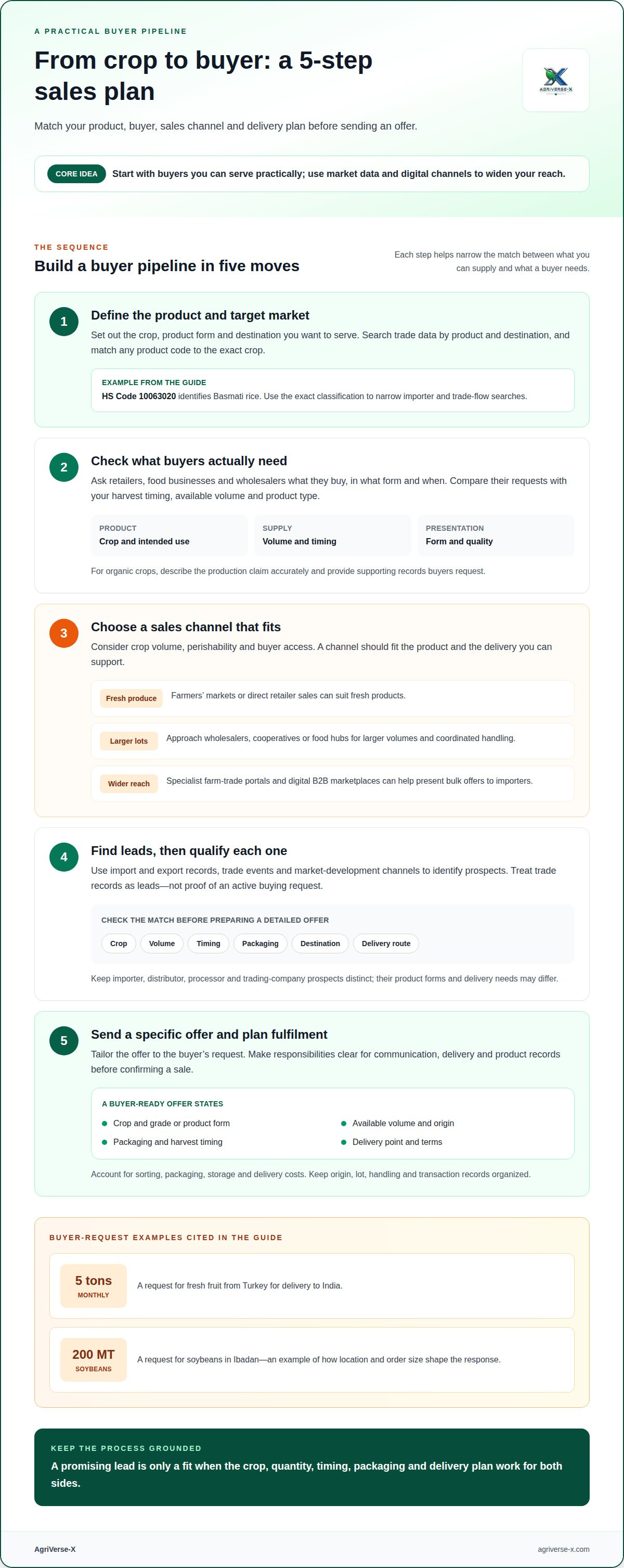
Build a buyer pipeline by matching each crop with a market, buyer type, and sales channel. Start with buyers you can serve practically, then use trade data and digital marketplaces to identify potential importers.
-
Research Markets with HS Codes and Trade Data
Search trade data by product and destination before approaching overseas buyers. For example, HS Code 10063020 identifies Basmati rice, helping you narrow searches to relevant importers and trade flows. Compare demand across destinations, then prepare a short list of target markets for export promotion agencies, trade missions, or agricultural trade shows.
Use those market-development channels to learn buyer specifications and introduce your offer. Match the code to the exact product; a broad or incorrect classification can produce irrelevant results. Record the destination, product form, and buyer type together so each enquiry addresses a real market opportunity.
-
Identify Buyer Demand and Local Markets
Ask local retailers, food businesses, and wholesalers what they buy, in what form, and when. Restaurants, cafes, resorts, and grocery chains may seek fresh produce, while processors may need grains or pulses. Visit farmers’ markets and wholesale markets to observe which products move, how sellers present quality, and which buyers purchase directly.
In the United States, farmers can approach farmers’ markets, wholesale markets, food businesses, retailers, agroindustry, and online B2B platforms. To identify demand, compare buyer requests with your harvest timing, available volume, and product type. For organic crops, describe the production claim accurately and present supporting records buyers request.
-
Choose Sales Channels and Marketplaces
Choose a channel that fits crop volume, perishability, and buyer access. Sell fresh produce at a farmers’ market or directly to retailers; approach wholesalers for larger lots; use specialist farm-trade portals and digital B2B marketplaces to reach importers. Facebook Marketplace and agricultural niche groups can support local transactions, while online listings can present bulk offers to international buyers.
Set wholesale and direct-sale prices based on production, sorting, packaging, storage, and delivery costs. Compare your costs with buyer offers, then clearly state the quantity, product condition, packaging, and delivery terms. For sales in the United States, follow the food-safety, labelling, licensing, and traceability requirements that apply to your product and sales channel. Keep origin, lot, handling, and transaction records organized.
-
Connect Through Cooperatives, Brokers, and Food Hubs
Use a cooperative to combine members’ crops into volumes that suit wholesale or processor orders. A broker can introduce suppliers to buyers and help communicate specifications; agree on responsibilities and payment terms before confirming a sale. Food hubs can aggregate products from multiple farms and coordinate steps such as sorting, storage, and distribution for regional buyers.
Ask each channel to clarify who communicates with the buyer, arranges delivery, and manages product records. A cooperative might assemble a grain shipment, while a food hub could connect vegetable growers with retailers. These routes can broaden your buyer base and reduce dependence on a single purchaser.
Finding agricultural commodity buyers and importers
Build a buyer list around the crop, destination, shipment size, and delivery terms you can support. Use trade records to identify potential importers, then tailor each approach to the buyer’s stated demand.
-
Use Import and Export Data to Identify Buyers
Search import and export records by commodity, destination, and trading period. Look for businesses that regularly import the same crop, then record their locations, product descriptions, and shipment patterns. Treat these records as leads, not proof of an active buying request. Compare multiple entries before prioritizing a prospect, and avoid firms whose imports do not match your product or capacity.
-
Reach International Importers and Distributors
Prepare a concise export offer for each importer or distributor. State the crop, grade or product form, available volume, origin, packaging, harvest timing, and delivery point. For example, a buyer inquiry sought 5 tons of fresh fruit monthly from Turkey for delivery to India. Use that pattern to make your own offer specific, and address the buyer’s destination and supply schedule directly.
- Separate importers, distributors, processors, and trading companies in your prospect list. Importers source goods across borders; distributors then supply regional retailers or food businesses. Exporters and importers may also coordinate warehousing, logistics, and supply chains, so identify which party handles each step before negotiating. A processor buying soybeans, for example, may need a different product form and delivery plan than a wholesale distributor.
Use trade shows, export-promotion events, and market-development programmes to meet potential buyers. Bring a product sheet and a clear description of your supply capacity. After each meeting, send a tailored message naming the crop you discussed and the next practical step, such as sharing specifications or discussing a sample.
- Qualify each lead before spending time on a detailed offer. Match the buyer’s request against your crop, volume, timing, packaging, and route. One inquiry from a Nigerian broker dated June 23, 2026, sought 200 MT of soybeans in Ibadan. That example shows why location and order size matter: a local bulk request needs a different response from an overseas shipment.
Create a simple buyer tracker with the company name, destination, commodity, request date, quantity, delivery basis, and follow-up status. Record where each enquiry came from and distinguish stated requirements from assumptions. If a prospect requests a trial shipment followed by regular supply, respond to both parts clearly. Keep communication focused on what you can deliver, and update the record after every reply.
Improving buyer interest with clear photos and detailed descriptions
Wholesale sales can involve delayed payment, changed specifications, rejected deliveries, or quantity disputes. Reduce these risks with a written agreement covering the commodity, quality criteria, volume, delivery, inspection, payment timing, and remedies. Confirm payment arrangements through the relevant financial institution.
- Photograph each lot in clear light, with the crop filling the frame. Include a wider view and close-ups that show its condition, sorting, and packaging. For sesame seeds, photograph the actual lot for sale, not another harvest or a stock image. Add a simple label with the product name and origin beside the crop, without covering it.
Keep images current. If a fresh-produce listing shows mixed ripeness, describe it accurately rather than implying uniformity. Use separate photos for the product, packaging, and storage setup. Clear visuals help buyers compare products and assess whether your offer suits their stores, processing needs, or distribution network.
- Write a product description that answers buyers’ questions: commodity, variety where relevant, intended use, origin, available volume, packaging, harvest timing, and delivery location. Separate verified facts from promotional language. If a buyer requests organic produce, make that claim only when your production records and applicable certification support it.
Use buyer specifications as a checklist, not a generic template. For example, a listed ICUMSA 45 white sugar specification requires minimum polarization of 99.8%, with maximum moisture and ash content of 0.04% each. Those figures illustrate why sellers should state the matching grade and evidence, rather than calling commodities “premium” without detail.
- Meet potential buyers at international trade fairs and food exhibitions. Bring a concise product sheet, representative samples where practical, and photos of the same lot. Ask about the destination country, preferred packaging, delivery point, and expected supply schedule. Record answers promptly so your follow-up reflects the buyer’s actual requirements.
After the event, send a tailored offer naming the product and region, followed by the relevant specifications. A distributor supplying stores may need consistent packaged products, while a processor may focus on grade and bulk availability. Follow up with the agreed documents or sample details rather than sending a generic message to every contact.
- Agree payment and delivery terms before preparing an international shipment. Spell out the product description, quantity, inspection method, delivery basis, payment deadline, and process for handling a discrepancy. For a new export relationship, a Letter of Credit at sight is one payment method sellers may discuss; 100% advance payment is another option if both parties agree.
Check that the written contract matches the final invoice and shipment documents. Keep copies of buyer messages, signed terms, inspection records, and proof of delivery. A clear transaction record makes disputes about quality, payment, or shipment easier to review.
Platform fees, reach, and logistics
Compare platforms by buyer reach, seller costs, sales tools, and delivery support. Choose a channel that fits your crop, market, and order size.
-
Compare Online B2B Trading Platforms
Before creating an account, compare each platform’s audience, listing options, buyer communication tools, and fees. Check whether it serves agricultural commodities and connects sellers with importers, processors, or retailers. A bulk-trading platform may suit grain suppliers, while a local marketplace may better fit seasonal produce.
Read how each platform charges fees. A subscription, listing charge, or transaction commission affects your net return differently. Record all applicable charges and compare the total with the value and size of the orders you expect to pursue. A platform’s global reach does not necessarily mean it reaches your target buyers.
- Assess buyer profiles and visibility features before publishing. Look for information about business identity, product interests, and purchasing requirements. A verified profile can provide useful signals, but it does not replace your own checks on the buyer, payment terms, and contract. Compare how platforms handle enquiries and whether sellers can respond directly.
Search for requests that match your crop, such as sesame, soybeans, or fresh vegetables. Note the requested volume, location, delivery terms, and product use. If listings are vague or unrelated, the platform may provide fewer useful leads for your offer.
-
Choose a Platform for Your Sales
Choose the platform that fits your crop, buyers, and operating region. Farmers in India can compare government-supported and private options by local coverage, crop categories, language access, buyer reach, and ease of use. Check whether the platform serves your state and connects sellers with the relevant markets, rather than assuming national access means local demand.
For global agricultural trade, prioritize platforms that support export-focused buyer discovery and provide clear shipment requirements. For direct sales, focus on nearby retailers or wholesalers and practical collection arrangements. Use platform tools to present product details and manage enquiries.
- Plan logistics as you compare platforms. Before accepting an order, confirm who arranges collection, transport, storage, packaging, and delivery. One buyer listing requested a FOB quote and said its carrier would collect from the supplier’s location. This differs from seller-managed delivery, so specify the agreed handover point in your offer.
Compare the full route from harvest location to buyer. Fresh produce may need prompt handling and nearby delivery, while grains can be stored in bulk and transported onward. Use the platform’s stated terms to map responsibilities, and keep written records of agreed quantities, timing, and handover.
Selling fresh produce, grains, seeds, spices, fertilizers, and animal feed
Match each product with buyers based on its use, condition, and handling needs. A tomato supplier, maize grower, and animal-feed seller each need a distinct offer and delivery plan.
- Sell fresh produce through buyers who can work with its harvest schedule. Restaurants, cafes, resorts, grocery stores, and produce wholesalers may seek tomatoes, peppers, leafy greens, or fruit. State the crop, harvest timing, available volume, packing format, and collection location. Before promising delivery to buyers in other markets, plan the route and handover, since freshness and handling affect where the product can be sold.
- Separate grains intended for food, feed, planting, or processing. A maize buyer seeking animal-feed grain has different requirements from a mill buying maize for human consumption. Describe the grain type, use, origin, quantity, packaging, and storage conditions. For rice, wheat, sorghum, or millet, approach processors, feed businesses, wholesalers, and importers whose needs match the commodity.
- Describe seeds and planting materials with precise variety and origin details. Buyers need to distinguish seed intended for planting from grain for food or feed. State treatment, quantity, planting season, storage needs, and germination information where relevant. A vegetable-seed listing, for example, should accurately identify the variety and any certification or restrictions, then target growers, nurseries, or agricultural input retailers.
- Position spices by form, intended use, and supply consistency. Ginger, turmeric, chilli, and dried herbs may interest processors, food businesses, wholesalers, or retailers. Identify whether each product is fresh, dried, or processed, and describe its packaging and supply periods. For fertilisers, state the product type and composition, and provide labels, safety instructions, application rates, storage details, and registration information where required.
- Target animal-feed buyers by naming the species and feed use. A poultry-feed buyer may seek maize feed or soybean meal, while livestock operations may need hay, forage, or cattle feed. Label products accurately and meet applicable feed-safety and veterinary requirements. Before accepting an order, align quantity, packaging, delivery arrangements, and records with the buyer’s request. These details help farming businesses compare offers and plan procurement clearly.
AgriVerse-X: Verified Agricultural Digital Ecosystem
AgriVerse-X helps farmers, agribusinesses, and cooperatives present products through verified digital profiles and agricultural marketplaces. AgriVerse-X distributes bulk agricultural commodities such as soybeans, sesame seeds, honey beans, and W320 oven-roasted cashew nuts. This brings product information and seller credentials together for buyers assessing potential suppliers.
Turn to AgriVerse-X when you’re ready to organize your digital presence and connect your offer with agricultural marketplace opportunities. Digital traceability records can also structure product information and compliance-aligned reporting. Marketplace access and partner-delivered services may vary by country and applicable requirements.
Build Your Next Buyer Connection
Make buyer development part of farm planning, not a task to leave until harvest. Review upcoming production, identify decisions that could affect supply, and prepare for buyer conversations before the crop is ready. This steady approach to finding buyers for agricultural products can make market outreach a consistent business practice.
Use each season to sharpen your commercial judgment. Notice which buyer priorities suit your operation, which trade-offs matter, and where your plans need adjustment. Understanding these choices helps you pursue opportunities with focus while keeping production decisions grounded in your farm’s capacity.
Keep learning, plan deliberately, and use each season to inform the next. Strong buyer relationships begin with thoughtful preparation and grow through reliable communication.
Frequently Asked Questions
How Do Farmers Sell Their Crops From Various Channels?
Test demand locally, then expand through wholesale, retail, and digital channels. For example, a grower might offer a small harvest nearby, note which varieties buyers request, and use that feedback when approaching larger purchasers. Cooperatives can combine members’ harvests for bulk orders, while direct sales suit farmers who can manage customer communication and delivery. Choose channels that fit your crop’s harvest timing and sales capacity.
How can I increase my chances of getting agricultural buyers?
A practical way to find buyers for agricultural products is to make your offer easy to assess and respond consistently to enquiries. Tailor each pitch to the buyer’s product use and purchasing pattern instead of sending the same message to everyone. Track enquiries, buyer feedback, and follow-up dates. If buyers repeatedly ask for a different package or delivery window, use that feedback to refine future offers.
How do I check if an international buyer is real?
Confirm the buyer’s business identity before agreeing to shipment or payment terms. Match the company name, contact details, and payment beneficiary, and look for inconsistencies between documents and messages. Request a written purchase order or contract that identifies the product, quantity, delivery terms, and payment conditions. Keep communication and transaction records, and don’t release goods based only on screenshots or informal assurances.
Why are HS codes important for finding buyers?
HS codes organize trade information by product category, making import and export records easier to search. Use the closest accurate classification for your crop and product form, then compare activity across destinations. A code that is too broad can return unrelated products, while one that does not match your goods can misdirect your search. Treat code-based results as leads and compare them with actual buyer requirements.
How can growers find wholesale buyers such as grocery stores, restaurants, and distributors?
Contact the person responsible for purchasing, such as a store buyer, restaurant manager, or distributor’s procurement contact. Make your first message specific to the business: explain the crop’s intended use and how your supply schedule fits its purchasing needs. A restaurant may value dependable seasonal ingredients, while a distributor may need a repeatable supply plan. Follow up with a concise offer and answer questions directly.
What online marketplaces connect U.S. farmers with buyers for crops and livestock?
Farmers can explore Facebook Marketplace for local agricultural transactions and use agricultural niche groups to reach interested buyers. Farmers’ markets, wholesale markets, and online B2B marketplaces offer other routes to buyers. Match the channel to the product and intended customer, since a local listing serves a different purpose from a bulk trade offer. For livestock, describe the product accurately and account for applicable sale and transport requirements.
What information should a farm include in a product listing or sales pitch to attract buyers?
Give buyers a clear commercial picture: identify the product and intended use, explain when you can supply it, state the collection or delivery arrangement, and provide a reliable contact. Add supporting records, such as lot identification or origin documentation, when available and appropriate. End with a clear next step, such as discussing a sample, confirming specifications, or arranging a conversation about supply.


