

A productive lease starts with a clear purpose: decide how you want the land used and what kind of relationship you want with a tenant. If you’re asking how to lease your farmland to a farmer, look for terms that support your goals while giving the farmer a workable opportunity. A clear agreement sets expectations from the outset.
Leasing farmland can keep land in agricultural use and give a farmer room to operate or grow a business. But there is more to the arrangement than agreeing on rent. Landowners and tenants need a shared understanding of their responsibilities, communication, and how the agreement will work over time.
This guide explains the choices that shape a farmland lease, including land goals, local requirements, operating costs, expected returns, and farming practices. Use it to identify the questions that matter for your property and prepare for a focused discussion with a prospective tenant.
Key Takeaways
- Compare cash-rent, crop-share, and other lease structures to match how you want rent, costs, and crop risk allocated.
- Assess soil and zoning alongside your land goals to identify farming activities that suit the property.
- Put payment terms, farming practices, responsibilities, and lease-end procedures in a written agreement.
- Use a farmland listing and leasing platform to connect landowners with prospective agricultural tenants.
Farmland Leases - What Are My Options?
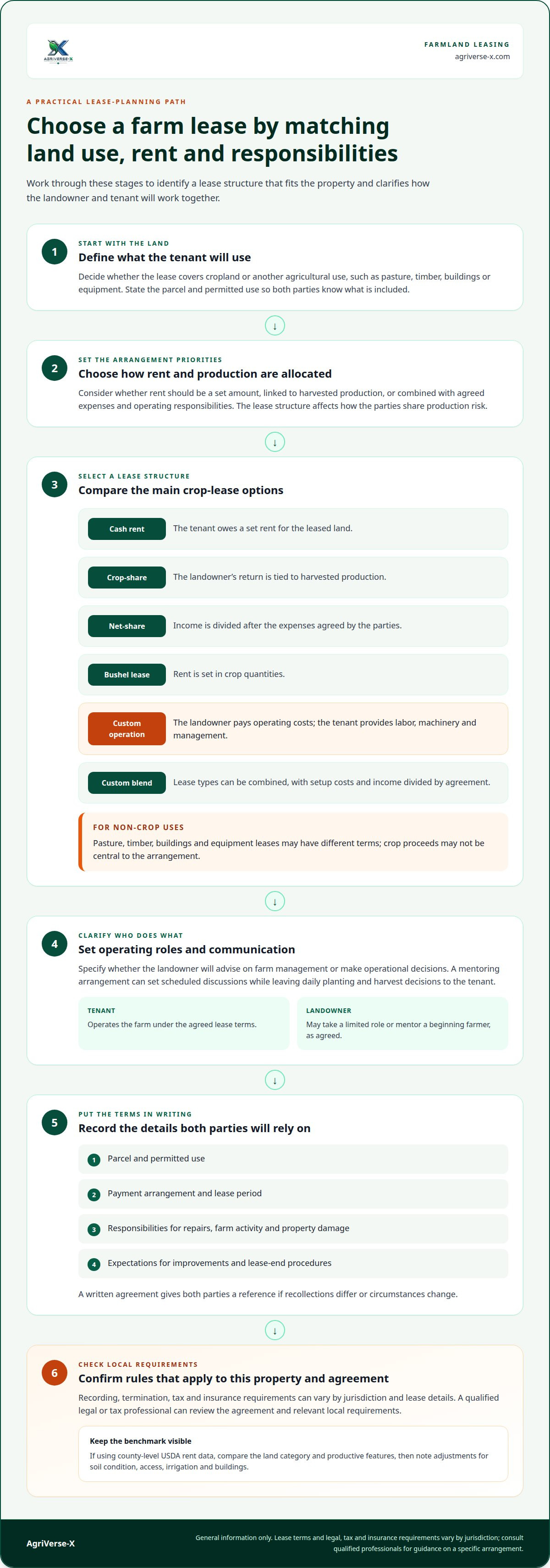
A farm lease sets the terms of the landowner-tenant relationship, including land use, payments, and responsibilities. Common options include cash rent, crop sharing, custom arrangements, and lease-to-own structures.
Landowner and Tenant Roles
The agreement defines how the landowner and tenant work together during the lease. The tenant operates the farm, while the landowner may take a limited role or mentor a beginning farmer. State whether the owner will advise on farm management or make operational decisions. For example, a mentoring arrangement can set out scheduled discussions while leaving daily planting and harvest decisions to the tenant.
A lease-to-own agreement can create a path to transferring farmland and may address the transition of a related farm business. Keep the land purchase terms separate from farm operations. Specify whether equipment or livestock are included, how purchase credits are recorded, and whether the landowner remains involved. A farm link program can also connect landowners with farmers seeking agricultural land.
Written and Verbal Agreements
A written agreement records the parties’ terms. A verbal agreement relies on what they said and can make responsibilities harder to establish. Put the parcel, permitted use, payment arrangement, lease period, and expectations for improvements in writing. Both parties can refer back to it if their recollections differ or circumstances change.
State law can affect enforceability and recording. According to the North Carolina General Assembly, in North Carolina, a lease for a term longer than three (3) years is not enforceable against lien creditors or a purchaser for value unless it is recorded. Recording rules and other lease requirements vary by jurisdiction.
Rental Rates and Fair Rent Calculations
Cash rent rates vary by state, county, and parcel, so a statewide figure may not reflect a particular field. County-level USDA data can offer a local benchmark, but land quality and included improvements affect how well that figure applies.
To estimate a fair rental rate using USDA county data, identify the relevant county and land category, then compare the property’s productive features with the benchmark. Adjust for differences such as soil condition, access, irrigation, and buildings. Keep the benchmark and adjustments visible so both parties can understand how you arrived at the proposed rent.
Tax and Liability Considerations
Tax treatment can depend on the rent structure, owner involvement, and property-related expenses. Keep separate records of rental income, property expenses, and improvements, then ask a qualified tax professional to assess the arrangement under local rules.
Lease terms can assign responsibility for repairs, farm activity, and property damage. For example, specify who handles a damaged access road or fence and how the parties record the repair. Insurance needs and legal duties vary by jurisdiction, so a qualified professional can review the agreement and relevant coverage.
What Are the Different Types of Farm Leases?
Farm leases differ in how they allocate crop income, operating responsibilities, and access to agricultural property. A crop lease covers land used to plant, grow, and harvest crops; other leases may cover pasture, timber, buildings, or equipment. The right structure depends on what the tenant will use and how the parties agree to share production risk.
Crop Leases Versus Other Agricultural Leases
With a cash-rent crop lease, the tenant owes a set rent. Crop-share rent ties the landowner’s return to harvested production. A net-share lease divides income after agreed expenses, while a bushel lease sets rent in crop quantities. A custom farm operation divides responsibilities differently: the landowner pays operating costs, and the tenant provides labor, machinery, and management.
A custom blend can combine lease types, with setup costs and income divided by agreement. These crop arrangements differ from leases for pasture, timber, buildings, or equipment, where crop proceeds may not be central. Clearly state the land and permitted use so both parties know whether crop planting and harvest are included.
Crop Loans, Insurance, and Buyer Notices
Crop leases may address crop ownership, financing, insurance proceeds, production records, and information shared with lenders or insurers. These matters can depend on the agreement and local requirements. Consult qualified professionals for guidance on financing and insurance, and refer to official sources for jurisdiction-specific requirements.
The federal Food Security Act of 1985, 7 U.S.C. § 1631, is cited in connection with notice of a landlord’s lien to crop buyers. Whether the law applies and what steps may be required depend on the circumstances and jurisdiction. Consult a qualified professional or official source about applicable requirements.
Ending Crop Leases and Tracking Planting
Ohio’s default termination rule may apply to agricultural leases for planting, growing, and harvesting crops when the lease has no termination date or notice method. The landowner must give written termination notice by September 1 in the year the lease is effective. Unless the agreement says otherwise, termination takes effect at the earlier of harvest’s end or December 31. Consult a qualified professional or official source to confirm requirements for a specific lease.
The Ohio rule does not apply to leases for pasture, timber, buildings, or equipment. For most major crops, the FSA crop acreage reporting deadline is July 15 annually after planting is complete. The FSA-578 is the Report of Acreage form used for that reporting. Refer to official sources for current reporting requirements and consider documenting planted fields and sharing relevant crop information.
Monitoring Tenants and Crop Progress
Set a reporting routine that fits the crop lease, such as recording planted fields, crop types, and harvest progress. Agree on field access and how updates will be shared. These records can help the parties track acreage reporting and raise questions before harvest, without directing the tenant’s daily management.
Attorney support with lease terms and termination
A farmland lease should align its term with the crop cycle, payment dates, and planned harvest. Set start and end dates that define when possession begins and ends, while allowing time for planting, production, and crop removal.
Attorney Support for Lease Terms
An attorney can help shape lease terms, termination procedures, and a trial period that fits the arrangement. This matters because unclear language about rent, crop ownership, or notice can affect income and farm operations.
Before signing, make sure the written lease covers payment duties, default, notice delivery, and how a breach can be cured. Include a repossession process if the tenant cannot correct a default. For a lease-to-own agreement, an attorney can explain each party’s rights and responsibilities if either defaults and help establish alternative dispute resolution if a dispute arises.
Default, Termination, and Disputes
A default clause defines a missed obligation and the steps available to address it. For example, the lease can define missed rent as a default, set out a notice process, and explain how the tenant can cure it before repossession is considered.
Set out how the parties will handle disagreements about production, payments, or property maintenance. Alternative dispute resolution offers a structured process if direct discussion fails. An attorney can help arrange that process and determine whether a trial period suits the lease. These terms give the landowner and tenant a defined path when performance or expectations differ.
Termination Notices and Deadlines
Termination notices must follow the applicable state’s deadline and delivery rules. According to the Iowa Legislature, the notice must be delivered on or before September 1, and the party receiving it or that party’s successor must sign acceptance of service.
Other state deadlines differ: Arkansas sets June 30 for non-renewal notice of an oral farm lease; Ohio’s default crop-lease deadline is September 1. Illinois generally uses October 31 or four months before lease end; Indiana and Minnesota generally use November 30 or three months before lease end. Missouri uses 60 days before lease end, Nebraska uses August 31, and Wisconsin uses September 30.
In Ohio, late notice from a landowner may allow a tenant to continue for another lease period or seek damages. The deadline applies to landowners, not tenant operators. Record the notice date, delivery method, and receipt to document compliance.
Lease Term and Dates
Set a lease term that gives the tenant time to complete the planned agricultural cycle and defines possession dates clearly. Choose a start date before access or field work begins, then set the end date around harvest and crop removal.
For example, a lease covering planting, growing, and harvesting should explain what happens if crops remain when the term ends. State whether renewal requires written notice and set out the notice deadline. In North Carolina, Arkansas, or Ohio, local rules may affect enforceability or termination, so align dates and notice clauses with the land’s jurisdiction.
Assessing land goals, soil type and zoning restrictions
Match the lease to your priorities, the land’s productive features, and permitted agricultural uses. A landowner seeking steady rental income may prefer predictable payments, while a tenant may value flexibility to build a farm business.
Set the Landowner’s Priorities
Start by deciding what you want the lease to achieve. Your priorities might include rental income, keeping the land in agricultural production, maintaining open space, or supporting a new farmer. Each goal points to different terms and tenant expectations.
For example, a landowner focused on soil care can make agreed farming practices part of the lease. An owner planning a future transition may consider a program that connects landowners with beginning farmers. Define the desired outcome before discussing rent, duration, or permitted uses.
Assess Soil and Land Features
Review the soil’s drainage, texture, slope, and current condition before matching the parcel to a farming plan. A low-lying field that holds water may suit different crops from a well-drained, gently sloping field. Soil conditions can also affect access, equipment use, and the timing of field work.
Record distinct areas separately. For example, note a productive crop field, a wet corner, and a wooded boundary instead of describing the whole property as uniform. This gives the tenant useful information and helps both parties define which areas the lease covers.
Consider existing features, too. A water source, access road, fencing, or storage building may support one type of operation but not another. List each feature and its condition in the lease, then clarify who can use and maintain it.
Understand Zoning and Permitted Uses
Zoning restrictions can limit which activities are allowed on a parcel. A plan for vegetable production may differ from one involving livestock, farm buildings, processing, or public sales. Identify the tenant’s intended use and compare it with the property’s zoning and applicable local requirements.
For example, a tenant proposing greenhouses or a farm shop may need different permissions from a tenant growing field crops. Describe the allowed agricultural activities in the lease, including any limits on structures, access, or non-farm uses. Do not assume that “agriculture” permits every possible activity.
Match the Tenant and Lease
Use your land assessment to describe the opportunity clearly: soil conditions, access, available infrastructure, permitted uses, and your priorities as the landowner. A tenant planning soybeans may focus on workable fields and equipment access, while a vegetable grower may need reliable water and suitable growing areas.
During lease discussions, connect each priority to a term. Define permitted uses, maintenance duties, improvements, and how changes to the farming plan require agreement. This helps the parties shape a practical lease around the actual land rather than assumptions about its potential.
Operating costs, profits, and farming practices in lease terms
A farmland lease should state who pays operating costs, how the parties share income, and which farming practices apply. Include these terms alongside rent, land use, maintenance, and the process for resolving disagreements.
For example, assign responsibility for seed, fertilizer, fuel, labor, machinery, irrigation, and repairs. A beginning farmer may manage daily field operations while the landowner covers agreed property expenses. Name each cost in the written agreement rather than relying on assumptions about who usually pays.
Allocate Costs and Income
Rental terms can reflect land value, property taxes, and commodity prices. The lease type also determines who carries operating costs. In a custom farm arrangement, the landowner pays operating expenses while the tenant provides labor, machinery, and management. State the arrangement clearly before planting begins.
For crop-share or net-share terms, define which expenses are deducted from crop income before proceeds are divided. For example, specify whether seed and fertilizer are deducted first and how the parties record those costs. Crop-share sustainability depends on the agricultural industry, location, and current market statistics, so assess the arrangement against local production and expenses.
Explain how the parties will handle a poor harvest, changing input costs, or delayed crop sales. The lease might specify whether shared costs are recorded by invoice and when crop proceeds are reconciled. Clear records distinguish gross crop income from the amount available for distribution.
Set Farming Practice Terms
Describe the practices expected at each stage of the operation. Terms can cover crop rotation, cover crops, tillage, soil amendments, erosion control, water use, and field-boundary maintenance. For example, the agreement can require the tenant to record field inputs and notify the landowner before making a lasting change to the land.
State that chemical use must follow applicable requirements and be assessed by qualified professionals. The lease can assign responsibility for purchase, storage, application records, and notification. This sets out a clear process for crop-protection decisions and avoids uncertainty about each party’s duties.
Define how the landowner and tenant will discuss changes to farming practices. A tenant might propose a new crop rotation after reviewing field conditions, while the landowner may want notice before soil amendments or improvements. Record approval steps and any limits in the lease.
Build Clear Operating Terms
Tie each payment obligation to a person, record, and due date. Identify who keeps receipts, tracks crop sales, maintains shared equipment, and reports damage. For instance, the lease can require the tenant to provide an expense summary when crop income is distributed.
Review the terms together before the farming season begins. Confirm that the rent structure, cost allocation, production records, and farming practices describe the same operation. A precise agreement gives both parties a practical framework for managing costs, income, and land stewardship.
AgriVerse-X: Digital Agricultural Marketplace and Profiles
AgriVerse-X may support digital agricultural marketplace and profile features, subject to availability and confirmation in approved programme information. Farmers, cooperatives, and service providers may be able to present their products, services, skills, and certifications through profiles.
If available, profiles and marketplace listings can help prospective participants understand the agricultural activity, resources, or services connected to an opportunity. For example, a farmer may present relevant skills, while landowners may be able to share lease opportunities. Listings for storage, equipment rentals, machinery, inputs, and services should not be assumed to be available unless confirmed by AgriVerse-X.
Land and lease arrangements remain subject to local requirements and the parties’ due diligence. Contact AgriVerse-X to ask about current marketplace features and any farmland or lease listing options.
Turn Your Lease Plan Into a Clear Opportunity
A well-defined lease can be the starting point for a longer relationship between a landowner and a farmer. Treat the opportunity as more than available acreage: describe the intended agricultural use, the property’s practical features, and the kind of tenant relationship you hope to build.
If you’re asking how to lease my farmland to a farmer, focus on presenting the opportunity clearly. AgriVerse-X lists farmland and leases, and verified digital profiles can showcase farmers’ skills, services, and certifications. The platform helps landowners and prospective tenants discover agricultural opportunities and present their experience.
Use the listing to communicate the opportunity, then manage the lease agreement, local requirements, and due diligence directly between the parties, with qualified professional support where needed. Clear expectations can turn a land-use plan into a practical agricultural arrangement.
Contact AgriVerse-X about your farmland lease and take the next step toward presenting your land opportunity. Make your plans clear, create room for the right farming relationship, and move forward with confidence.
Frequently Asked Questions
How do I find and vet a farmer to lease my farmland?
Look for a tenant whose farming plan fits the property and your lease goals. Review their agricultural experience, proposed crops or livestock, equipment access, and ability to manage the operation. Ask for relevant references and discuss how they would maintain the land. If a digital profile is available, it may provide information about a farmer’s skills and certifications, but it does not replace your own due diligence or a clear written agreement.
What are the differences between cash rent, crop-share, and flexible cash leases?
Cash rent sets a fixed payment, while crop-share rent links the landowner’s return to a share of the harvested crop. A flexible cash lease adjusts rent according to terms agreed by the parties, such as a base payment plus a production- or market-based adjustment. Define the calculation, records, payment dates, and any limits in writing. The key difference is how the lease allocates production risk and changes in income.
Are written farmland leases required, and what state laws apply?
Use a written lease even where local law may recognize verbal agreements. State rules can affect enforceability, recording, signatures, and termination notice, and requirements may depend on the lease term or land use. For example, rules may differ between crop production and pasture. Identify the state where the land is located, then ask a qualified local attorney to review the agreement and explain applicable requirements before signing.
Who pays for property taxes, insurance, repairs, utilities, and conservation practices under a farm lease?
Assign each expense directly rather than assuming a standard division. For example, the lease can make the landowner responsible for property taxes and assign routine equipment or fence repairs to the tenant. Address insurance, utilities, conservation work, and shared improvements separately. Specify who arranges and records each item, and seek qualified tax, insurance, or legal advice for obligations that depend on local rules.
How can a landowner end or renew a farm lease, and what notice deadlines apply?
Follow the lease’s renewal and termination clauses, then compare them with the notice rules that apply where the land is located. Deadlines and delivery methods vary, so calendar the notice date and retain proof of delivery and receipt. A renewal clause should say whether renewal is automatic or requires written agreement. Late or improperly delivered notice can affect the parties’ rights, so establish the process before the lease begins.
What risks should landowners address, including environmental damage, soil health, and unpaid rent?
Document the property’s condition before the tenancy, including visible erosion, drainage problems, damaged boundaries, and existing contamination concerns. Set expectations for soil stewardship, permitted inputs, waste handling, and reporting damage. For unpaid rent, define due dates, written notice, a reasonable cure process, and the consequences of unresolved default. Clear records, agreed inspection access, and local professional guidance help avoid ambiguity about responsibilities.
What are typical farmland cash rent rates per acre by state and county?
Cash rent rates vary by state, county, and parcel. County-level USDA data can provide a local benchmark, adjusted for soil condition, access, irrigation, and buildings.


