

A promising origin is only the starting point: food-safety checks help determine whether an agricultural shipment suits your market. To learn how to source agricultural products from Africa safely, choose the product and origin, define its specifications, assess suppliers, and verify samples, shipping documents, quality, and destination-country requirements.
Finding the right product and supplier is an important first step. Moisture, aflatoxin, pesticide residues, handling, and transport can also affect quality and acceptance, so build checks into the process before an order ships. Requirements vary by product and destination, making clear specifications and reliable records essential.
This guide explains how to match products with potential origins, find suppliers through trade networks and agricultural marketplaces, and assess samples against written specifications. It also covers the documents to review, the role of independent inspections, and food-safety and post-harvest quality considerations. Use these steps to make sourcing decisions with clearer evidence and fewer avoidable gaps.
Key Takeaways
- Match the product to a suitable origin, then assess the supplier’s registration, export documentation, certifications, and trade references.
- Use directories, cooperatives, and referrals to identify suppliers; agree on written product specifications and compare a sample before ordering.
- Prepare for import by organizing key shipping documents and confirming destination-country requirements for the specific commodity.
- Build quality checks around handling and transport: define grades and moisture expectations, request samples, and arrange inspection before dispatch.
- Check food-safety risks and documentation for each product, and contact AgriVerse-X to ask whether tree-crop and plantation listings are available.
Which African Countries Supply Which Agricultural Products?
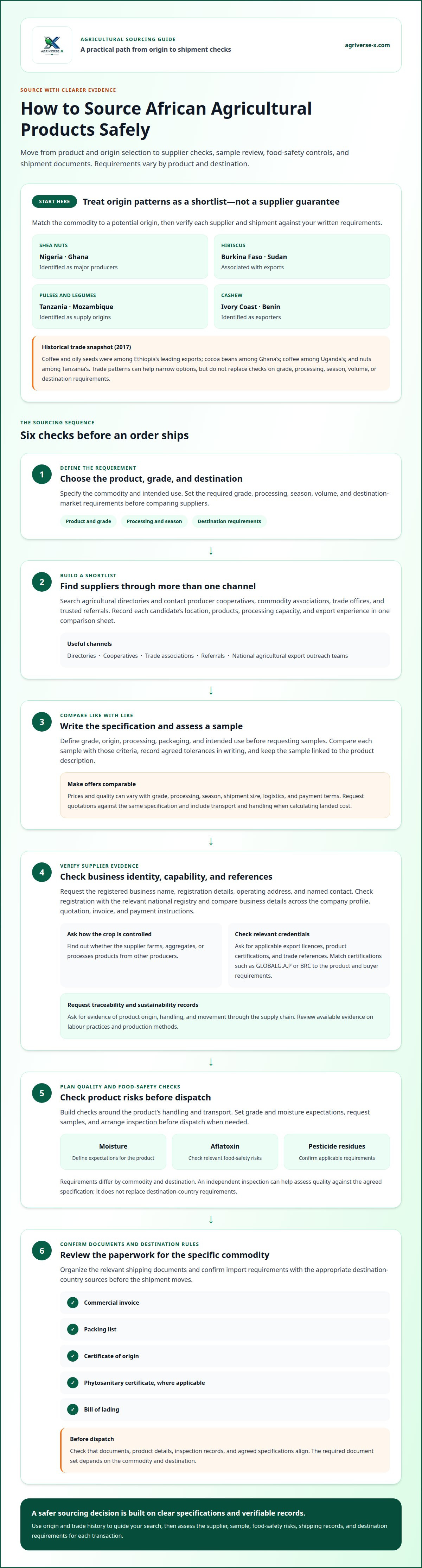
Choose an origin by matching the product, grade, season, and destination requirements. Historical trade patterns can help narrow the options, but each supplier and shipment still needs its own checks.
- Match the country to the commodity. Nigeria and Ghana are identified as major shea-nut producers; Burkina Faso and Sudan are associated with hibiscus exports. Tanzania and Mozambique supply pulses and legumes, while Ivory Coast and Benin are identified as cashew exporters. Treat these as starting points, then compare suppliers against your written specification.
- Use export history to shortlist markets. In a 2017 export snapshot, coffee and oily seeds were among Ethiopia’s leading exports, cocoa beans among Ghana’s, coffee among Uganda’s, and nuts among Tanzania’s. Product suitability still depends on grade, processing, season, volume, and the route to your destination.
- Compare offers on the same basis. Prices and quality vary with product grade, processing, season, shipment size, logistics, and payment terms. Request comparable quotations against one specification, assess samples, and calculate landed cost, including transport and handling.
- Consider trade development, not just current volume. African agricultural export value grew at an average annual rate of 6.0 percent from 1999 to 2019. Agricultural trade between China and Africa grew at an average annual rate of 17.3% from 2000 to 2018, reaching $6.92 billion in 2018, or 3.2% of China’s total agricultural trade.
- Verify the supplier and export paperwork. Obtain the supplier’s registered business name and registration details, then check them with the relevant national registry. Ask for applicable export licences, product certifications, and trade references. The document set can include a commercial invoice, packing list, certificate of origin, phytosanitary certificate, and bill of lading. Confirm the destination-country requirements for the product.
- Use export outreach channels and set payment terms. Ask a national agricultural export outreach team or trade office for supplier directories and market information. For a first transaction, a suggested structure is 50% in advance and 50% on the bill of lading; escrow tied to verified milestones is another suggested option. Agree terms in writing before payment.
- Request traceability and sustainability evidence. Ask suppliers for records showing the product’s origin, handling, and movement through the supply chain. Review available evidence on labour practices and production methods, and match certifications such as GLOBALG.A.P or BRC to the product and buyer requirements.
Finding Agricultural Suppliers Through Directories, Cooperatives, Associations, and Referrals
Build a supplier shortlist through agricultural directories, producer cooperatives, trade associations, and referrals. Assess each candidate against clear product requirements and evidence of their ability to supply.
- Search several supplier channels. Use directories to identify exporters, then approach cooperatives and commodity associations for producer or processor contacts. For coffee, an association referral may connect buyers with producer groups. Record each supplier’s location, products, processing capacity, and export experience in one comparison sheet.
- Check business identity and crop control. Request the registered business name, registration details, operating address, and named contact. Compare these details across the company profile, quotation, invoice, and payment instructions. Ask how the supplier controls the crop, including whether it farms, aggregates, or processes products from other producers.
- Match samples to written specifications. Define the product’s grade, origin, processing, packaging, and intended use before requesting a sample. Compare it with those criteria and record agreed tolerances in writing. Keep the sample linked to the product description so both parties can use it as a reference during order discussions.
- Test references with specific questions. Ask for trade references from buyers familiar with the supplier’s product and export process. Find out whether previous orders matched specifications, whether documents arrived on time, and how differences were resolved. Check that each reference concerns a comparable commodity, such as coffee rather than an unrelated service.
- Set clear roles before ordering. Buyers define product requirements, quantities, inspection points, and delivery terms. Suppliers provide accurate product information, samples, and transaction records. Authorities handle official registrations, licences, or certificates within their remit. Trade consultants may coordinate sourcing or paperwork, but they do not replace official approvals.
- Assess agricultural services separately. For processing, logistics, or testing, specify the task, location, service output, and required records. Review relevant experience and qualifications for the work. Assess a grain processor against your processing needs, for example, and ask a logistics provider to explain its handling and shipment plan.
- Build a relationship through documented follow-up. Start with an order scope both parties can manage, then record specifications, changes, delivery updates, and quality outcomes. One reported supplier-network example involved six local suppliers and 70,000 farmers gaining access to supplies within three years. Consistent records help buyers and suppliers improve repeat-order planning.
Import Documents and Phytosanitary Certificates
Shipping, insurance, tariffs, and handling costs have no single typical add-on. They depend on the destination, commodity, route, shipment terms, and applicable import charges. Build a landed-cost estimate from written quotations and destination-country requirements before agreeing to a bulk order.
Identify Import Documents and Certificates
Match certificates and shipping records to the product, shipment, and destination. A phytosanitary certificate concerns plant health, while a certificate of origin records where goods originate. A typical document set may include a commercial invoice, packing list, phytosanitary certificate, certificate of origin, and bill of lading. Ask the supplier to prepare documents for the actual shipment, not a previous lot.
Keep every record connected to the purchase order and product description. For example, ensure the invoice and packing list describe the same commodity and quantities. Store inspection photos, temperature logs where relevant, certificates, and delivery confirmation in the shipment file. This creates a traceable record if a document needs review during import processing.
Review Shipping Documents and Import Regulations
Compare each shipping document with the destination country’s import rules for that commodity. Requirements differ by destination and product, so identify the applicable documents before shipment. Check that the importer, exporter, product description, origin, and shipment details align across the invoice, packing list, certificates, and bill of lading.
Use destination requirements to set a document deadline with the supplier and freight coordinator. A missing or inconsistent phytosanitary certificate can delay a plant-product shipment. Keep digital copies of the purchase order, inspection records, certificates, and delivery confirmation together, then match the final documents to the cargo before release.
- Plan bulk imports against demand. Wheat, palm oil, and maize together accounted for 25% of Africa’s agricultural imports in 2017. African agricultural import value grew at an average annual rate of 7.4 percent from 1999 to 2019. For a bulk order, connect quantity and delivery timing to buyer demand, storage capacity, and the product’s intended use.
- Assess food-security supply needs. ERS projected sub-Saharan Africa’s bulk grain imports to grow by 4.9 percent per year and total 152 million tons by 2032. Treat this projection as market context, then assess the commodity, buyer, and delivery corridor. Import planning should account for local supply and storage needs alongside trade opportunities.
- Evaluate poultry opportunities separately. ERS projected sub-Saharan Africa would remain the top global poultry importer, with imports exceeding 2.5 million metric tons per year by 2031. Poultry and animal products involve different documentation and controls from grains or plant products. Map the relevant product requirements before structuring an import order.
Post-Harvest Infrastructure and Quality Standards
Risks include supplier fraud, changing quality, transport delays, and disruption along a shipping route. Reduce exposure with consistent records, agreed specifications, and inspections at loading and arrival.
-
Review Post-Harvest Infrastructure and Standards
Assess handling between harvest and dispatch, including drying, sorting, storage, packaging, and loading. For sesame, ask how lots are separated and protected from moisture or contamination. Define grade, size, and moisture expectations in the written specification before production or aggregation begins.
Ask suppliers and logistics partners to describe their storage and handling arrangements. Map each handoff from the farm or collection point to loading, and identify who records changes in condition. For example, document when a lot is dried, packed, and transferred to a transport partner.
-
Request Samples and Verify Quality
Request a representative sample before committing to a large order, then compare it with the written specification. Record the sample’s product, origin, grade, and date, and retain a sealed reference where practical. For coffee, compare appearance, processing description, and agreed quality criteria rather than relying on photographs alone.
Use the sample to set measurable acceptance points for the shipment. Arrange an independent inspection at origin before dispatch and document the results with inspection photos. If buyer and supplier disagree, the written specification and retained sample provide a clear basis for discussing the difference.
-
Monitor Quality During Long-Distance Shipping
Plan checks at loading, transit handoffs, and destination arrival. For goods affected by temperature or humidity, arrange suitable monitoring and retain temperature logs where relevant. Agree who records seal condition, packaging damage, and delays, then link those records to the shipment documents.
Compare arrival quality with the approved sample and loading inspection. Long-distance transport can expose produce to handling changes, delays, or storage conditions that affect its condition. Keep dated records of each check, including photos and delivery confirmation. These records help buyers, suppliers, and logistics partners trace quality changes and improve future shipments.
Food Safety, Moisture, Aflatoxin, and Residue Requirements
- Set a destination-specific safety specification. Name the commodity, intended use, and destination market before requesting quotations. Requirements can differ between African countries, products, and importing markets. Write down the food-safety criteria, testing evidence, and documents needed for the actual order. A specification for sesame seeds may differ from one for fresh mangoes.
- Define moisture checks for the product. Agree how moisture will be assessed, recorded, and reported for each lot. Excess moisture during drying or storage can damage quality and increase spoilage risk. For maize or sesame, specify accepted moisture criteria in the purchase agreement, then link inspection results to the lot and shipment records.
- Address aflatoxin risk with testing. For susceptible crops such as maize and groundnuts, include aflatoxin testing in the order’s quality plan. Identify the sampling method, testing stage, and report format before dispatch. Request results tied to the specific lot, since a certificate or result for another shipment does not establish the condition of this batch.
- Specify pesticide-residue checks. Identify the residue tests relevant to the crop and destination, then agree how results will be documented. Ask the supplier for available treatment and production records alongside laboratory reports. A residue assessment should refer to the product lot being shipped, not general farm information or records from a previous season.
- Review certification against the product and buyer requirements. GLOBALG.A.P and BRC are examples of food-safety certifications buyers may check. Confirm the certificate’s named holder, scope, and relevance to the product. Treat certification as supporting evidence, not a substitute for shipment-specific inspection, test results, or the destination market’s import documents.
- Connect test results to physical samples. Agree who collects samples, how they are identified, and when tests take place. Keep the sample label, lot reference, inspection photos, and laboratory report together. For a bulk shipment, use records from loading and arrival to investigate differences between the tested sample and delivered goods.
- Maintain traceable records across each handoff. Link supplier details, crop origin, handling records, certificates, test results, and delivery confirmation to one purchase order. Challenges vary across products and supply chains, so do not assume one country’s process applies everywhere. The key is to define destination-specific criteria, test the actual lot, and retain evidence from dispatch through receipt.
AgriVerse-X Tree Crops and Plantation Products
AgriVerse-X is a practical option for buyers seeking African tree crops and plantation products through agricultural marketplace listings. Potential listings span raw commodities and processed products, helping buyers focus their search by product type and intended use.
Explore categories such as cocoa beans and cocoa products, coffee beans, tea leaves, rubber and latex products, oil-palm fruit and palm products, and coconut products. Listings may also include cashew nuts, shea nuts and shea products, macadamia nuts, almonds, walnuts, kola nuts, spices, and other plantation crops. Timber and plantation wood may appear where legally sourced, alongside bamboo, bamboo products, rattan, and other agricultural forestry products.
Use the product category to shape a focused enquiry. A buyer seeking cocoa beans, for example, can distinguish that requirement from cocoa products. Someone sourcing oil-palm fruit can specify whether they need the fruit or palm products. Clear descriptions help buyers and suppliers discuss the same commodity, form, and intended market.
AgriVerse-X enables farmers, agribusinesses, cooperatives, and service providers to create digital profiles showcasing products, services, skills, and certifications. Buyers can use marketplace listings and profile information to identify relevant suppliers and organize follow-up around the product, origin, documentation, and quality criteria required for an order. Profiles support discovery, but shipment-specific quality and documents still need to be assessed for each transaction.
Tree crops and plantation goods can have different handling and documentation needs. Cocoa beans, coffee beans, and tea leaves are distinct from processed cocoa products, latex, or timber. Timber, wildlife-related products, plant materials, and exported agricultural products may require additional permits and documentation. Identify the exact product and intended use, then establish which records and approvals apply to its trade and destination.
- For cocoa, coffee, and tea: define whether you need raw beans or leaves, or a processed product.
- For oils and plantation crops: name the specific material, such as oil-palm fruit, coconut products, or shea products.
- For forestry-related goods: distinguish legally sourced timber from bamboo, rattan, and other agricultural forestry products, and account for any additional documentation.
Contact AgriVerse-X to discuss agricultural marketplace listings for tree crops and plantation products.
Turn Sourcing Decisions Into a Repeatable Process
The next step is to turn a product requirement into a clear procurement workflow. Assign internal responsibilities for supplier communication, document review, quality decisions, and shipment records. A consistent process helps your team carry lessons from one purchase to the next while keeping product requirements and evidence connected.
AgriVerse-X supports supplier discovery through its agricultural marketplace, where farmers, agribusinesses, cooperatives, and service providers can create verified digital profiles. Digital traceability records can also help organize agricultural information. Use these tools as part of your sourcing process, alongside product-specific checks and independent assessments required for your transaction.
Whether you are building a new supply relationship or broadening an existing procurement pipeline, define the product and intended use first. Then assess each sourcing decision against your business and destination-market requirements. A focused approach to how to source agricultural products from Africa can turn research into a practical, repeatable sourcing plan.
Contact AgriVerse-X to discuss agricultural marketplace opportunities and take your next sourcing step with purpose.
Frequently Asked Questions
Why Source African Agri-Products?
Buyers may source from African markets to broaden their supply options and develop relationships with producers and exporters. The business case depends on whether an origin can meet the buyer’s needs for product consistency, continuity, and intended use. Treat sourcing as a procurement decision: compare the opportunity with existing supply channels, then assess whether the specific supplier and product support your purchasing objectives.
What Documents and Standards Apply to Agricultural Imports from Africa?
The applicable documents and standards depend on the product, its processing, its intended use, and the destination market. Create a requirements matrix with a row for each product and columns for the required evidence, responsible party, and submission stage. This helps distinguish requirements for raw goods from those for processed products without assuming one checklist fits every import.
Which African Countries Export the Most Agricultural Products?
A single ranking of top exporters depends on the year, product category, and measure used, such as total agricultural exports or exports of a specific commodity. The available examples do not identify one overall leader. For a useful comparison, define the product first, then assess country-level export records for that commodity and distinguish raw products from processed goods.
What Agricultural Products Are Commonly Sourced from Africa?
Buyers source products across staple foods, legumes, roots and tubers, fresh produce, oils, spices, and plantation crops. Examples in AgriVerse-X’s agricultural supply context include yam flour, semolina, honey beans, and sesame seeds. Specify the exact product form and intended use in your purchasing plan, since a processed food staple and a raw agricultural commodity need different commercial descriptions.
How Can Buyers Find and Verify African Agricultural Suppliers and Exporters?
After initial screening, maintain a dated supplier file with named contacts, the current specification version, sample identifiers, and records of resolved issues. Before sending payment, validate changed account instructions through a previously established contact channel. For repeat orders, compare each lot’s results and delivery communications with earlier records. This creates a practical history for procurement decisions without relying on memory or informal assurances.
What Are the Steps for Importing Agricultural Products from Africa to the United States?
For a shipment to the United States, first define the commodity, processing level, and intended use. Determine whether that specific product from its proposed origin can enter the destination market, then coordinate import requirements with the responsible authorities or a qualified import professional. Agree on responsibilities and document deadlines before dispatch. After arrival, retain shipment and inspection records with the purchase file to inform future procurement decisions.
How do prices and product quality compare across African sourcing countries?
Prices and quality vary by grade, processing, season, shipment size, logistics, and payment terms. Compare quotations against the same written specification, assess samples, and calculate landed cost.


