

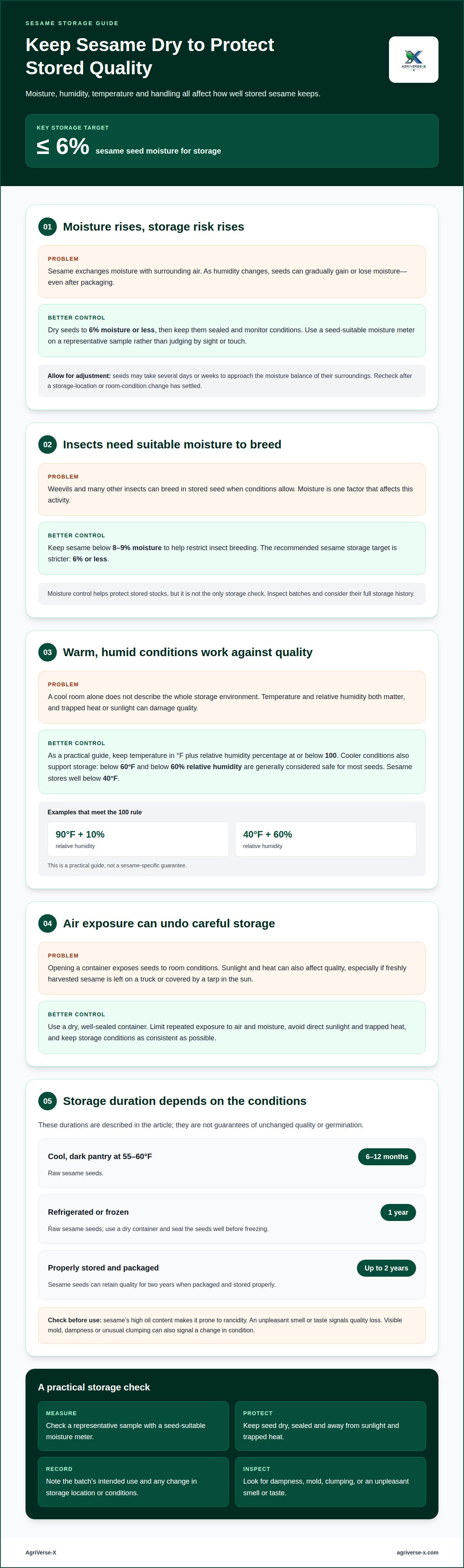
The right moisture content for storing sesame seeds is 6% or less. When packaged and stored properly, sesame seeds can retain quality for two years. Keeping seeds dry also matters for pest control: weevils and many other insects cannot breed in stored seed below 8-9% moisture.
Storage life isn’t determined by a date or container alone. Sesame seed quality can change as storage conditions shift, so moisture, surrounding humidity, temperature, and exposure during handling all deserve attention. A batch that begins dry still needs consistent care after it is stored.
This article explores how those factors work together. You’ll see how surrounding humidity influences seed moisture, why low moisture matters for insect activity, and how air exposure can affect stored seeds. It also explains practical considerations for drying sesame to a suitable storage level and protecting it through packaging and handling, so you can make more informed decisions about the condition and expected storage life of your sesame supply.
Key Takeaways
- Use both temperature and relative humidity to assess storage conditions, rather than relying on a cool room alone.
- Expect seeds to adjust gradually to the surrounding air; moisture changes may take days or weeks.
- Limit air and moisture exposure by sealing opened seeds in an airtight container and avoiding repeated exposure.
- Recognize how low seed moisture can restrict insect breeding and help protect stored stocks.
- Learn how controlled airflow supports drying and why freshly harvested sesame needs careful handling.
How Long Do Sesame Seeds Last?
Properly stored and packaged sesame seeds can retain quality for two years. Their storage life depends on moisture, temperature, relative humidity, and handling after harvest.
Temperature and Humidity for Safe Storage
A common seed-storage rule keeps temperature in degrees Fahrenheit plus relative humidity percentage at or below 100. For example, 90°F with 10% relative humidity and 40°F with 60% relative humidity meet that rule. Treat it as a practical guide, not a sesame-specific guarantee.
Cooler conditions also support storage. Temperatures below 60°F and relative humidity below 60% are generally considered safe for most seeds. Sesame stores well below 40°F. These conditions matter because warmth and humidity can work against preserving seed quality, especially when the storage environment changes during the season.
Conditions That Maintain Seed Viability
Seed viability means a seed remains capable of germination. Cool, dry storage helps preserve that potential, while sunlight and trapped heat can damage quality. Avoid leaving freshly harvested sesame on a truck for too long or covering it with a tarp in the sun, which can trap heat.
Storage needs depend on the seed’s intended use. Sesame for planting must remain viable; sesame for food is assessed for quality and freshness. A best-by date generally indicates quality, not whether seeds are safe to eat. Record each batch’s intended use so storage decisions suit its purpose.
Moisture Targets for Sealed Storage
For sesame, a recommended storage moisture content is 6% or less. Seeds should also be kept below 8% for good storage. A 1959 seed-storage recommendation gives 4-8% moisture for safely sealed seed, providing broader context for sealed storage rather than a replacement for the sesame target.
The stated sesame target applies to sesame seeds generally; it does not give separate numerical targets for hulled and unhulled seeds. That does not mean hull status has no effect. Use a seed-suitable moisture meter on a representative sample instead of estimating moisture by sight or touch.
Raw Seeds in Long-Term Storage
Raw sesame seeds can last 6-12 months in a cool, dark pantry kept at 55-60°F. Refrigerated or frozen raw seeds can be stored for one year. With proper storage conditions, seeds may keep for 10 or more years, though this is not a guarantee of unchanged quality or germination.
Before freezing sesame, ensure the container is dry and the seeds are well sealed. Sealed frozen sesame seeds can remain fresh for over a year. Sesame’s high oil content makes it prone to rancidity; an unpleasant smell or taste signals quality loss. Inspect each batch before use, particularly after extended storage.
Relative humidity and seed moisture equilibrium
Sesame seeds exchange moisture with the surrounding air until they approach equilibrium. This exchange can continue after packaging, so storage conditions affect the seeds as well as the container.
Seed Moisture and Longevity
Moisture equilibrium is the balance between seed moisture and humidity in the surrounding air. As air conditions change, seeds can gain or lose moisture, which affects how well they keep in storage.
Adjustment takes several days or weeks. At 15% relative humidity, seeds will dry to 6% moisture. At 90% relative humidity, seeds will dry to 19% moisture. These figures show why humidity matters over time, but they aren’t a sesame-specific conversion chart. Sesame’s storage life depends on keeping its moisture low as the environment changes.
Equilibrium values also differ between crops. Snap bean seed at 30% relative humidity has an approximate moisture content of 6.8%. That example illustrates crop variation; it shouldn’t be used to estimate sesame moisture. Measure sesame directly rather than applying another seed’s humidity relationship.
Environmental Effects on Seed Quality
Humidity around stored sesame affects how much moisture the seeds exchange with the air. A closed container slows that exchange, while each opening exposes the seeds to room conditions. Because the adjustment takes time, a brief change in humidity may not show up immediately in a moisture reading.
A drying example places corn at 14.8% moisture in equilibrium with air at 75% relative humidity. This demonstrates the relationship between seed and air moisture, but it does not give a sesame target. For sesame, use crop-specific measurements and consider the storage environment alongside them.
Record changes in storage location or room conditions. If a batch moves from a dry store to a more humid space, its moisture may gradually shift. Take another reading after conditions have settled; it can show the change more clearly than an immediate check.
Moisture, Mold, and Spoilage Signs
Mold growth may occur in seeds at moisture contents from 12-14% to 18-20%. This range signals why prolonged moisture exposure can damage stored seed, though it doesn’t establish whether a particular batch has mold.
Check for visible mold, dampness, or unusual clumping, which can signal a change in condition. Sesame can also turn rancid, with an unpleasant smell or taste indicating quality loss. Consider storage history and visible condition, rather than relying on a best-by date alone.
A sesame best-by date generally describes quality, not whether the seeds are safe to eat. A date alone, for example, cannot show whether moisture entered the container after packaging. Combine date information with storage records and inspection to assess freshness more reliably.
Moisture levels associated with insect activity
Seed moisture affects whether weevils and many other insects can breed in stored sesame. Keeping moisture below 8-9% helps limit breeding, but moisture control remains only one part of protecting a store.
A batch’s condition can change after storage begins. Sesame exposed to humid air may absorb moisture over time, so its initial reading may not reflect later conditions. Consider moisture together with the storage environment and signs of insect activity.
Why the 8-9% threshold matters
Weevils and many other insects cannot breed in stored seed when seed moisture is below 8-9%. That makes this range a useful reference when assessing whether sesame is suitable for storage. It concerns breeding, not whether insects are already present in a batch.
For example, seeds that meet the threshold when measured may later absorb moisture from humid air. Their moisture level could then move beyond the condition associated with restricted breeding. Keep sesame dry throughout storage instead of relying on a single pre-packaging reading.
Moisture also affects seed quality directly. Sesame stored above the recommended moisture level can heat quickly and become rancid. This deterioration can occur alongside insect concerns, so a low moisture reading does not replace checks for spoilage or visible pests.
Assessing a stored batch
Use a seed-suitable moisture meter to test a representative sesame sample. Record the reading, date, and storage conditions. If you divide a batch among containers, sample each one separately because their exposure to moisture may differ.
Inspect the seeds and container for visible insects, unusual clumping, dampness, or an unpleasant smell. These signs can help identify changing conditions, but they cannot establish the exact moisture percentage. A meter measures moisture; smell and appearance add context.
Compare the reading with the 8-9% breeding threshold. If moisture has risen, reduce further exposure to humid air and keep the batch dry. Don’t assume that insects will stop breeding merely because the seeds were once below the threshold. Reassessment is useful after storage conditions change or a container has been opened repeatedly.
Keep moisture control consistent
Consistent storage helps maintain conditions that limit insect breeding. Close containers after use, keep them away from damp surroundings, and assess moisture before mixing newly harvested sesame with a dry stored batch.
These measures target different points: measurement identifies moisture, sealed storage limits exposure, and inspection catches visible changes. Used together, they help protect sesame quality and reduce conditions that support insect breeding. The key benchmark remains seed moisture below 8-9%.
Exposure to air and moisture
Every time you open a sesame bag or jar, its contents meet the surrounding air and moisture. That exchange can gradually shorten storage life, especially in a humid room or when the container remains open during handling.
How repeated opening changes storage conditions
An open container exposes seeds to room air. If the air is humid, sesame can absorb moisture as it moves toward balance with its surroundings. Closing the lid after each use limits repeated exposure; leaving a bag open while weighing seeds allows more air contact.
Opening a large jar several times exposes the remaining seeds each time. Dividing sesame into smaller portions can reduce how often you open the main supply. Portioning what you expect to use within one month is a practical way to limit repeated exposure of the larger batch.
Choose packaging that limits air exchange
An airtight container helps protect opened sesame from air and moisture. A tightly closed jar or plastic freezer bag can work. Vacuum packaging is another option because it removes much of the air around the seeds.
Fully seal the package after each use, without leaving gaps around the closure. A loose lid or partly sealed bag lets air circulate and keeps seeds exposed between uses. Make sure the package is clean and dry before filling it, since moisture inside can undermine a tight seal.
Manage temperature changes and condensation
Moving a cold container into warm, humid air can cause condensation on its surface. If moisture reaches the sesame, the seeds may absorb it. Let the closed container adjust before opening it in a warmer room, reducing the chance that humid air reaches cold seeds.
Repeatedly moving sesame between a refrigerator and a warm kitchen creates more opportunities for exposure. Keep the container sealed as its temperature changes, and open it only when needed. This is especially useful for a large package used gradually.
Protect sesame during routine handling
Use a dry utensil to take out sesame rather than pouring it over a steaming pot. Steam adds moisture around the opening, while a damp spoon can transfer water into the container. Close the package promptly after measuring a portion.
Sesame’s high oil content makes it prone to rancidity, so keep it sealed and limit unnecessary air contact. An unpleasant smell or taste in stored seeds can signal rancidity. Airtight packaging slows exposure but cannot reverse quality loss that has already occurred.
How should sesame seeds be dried to reach safe storage moisture?
Dry sesame seeds to 6% moisture or less before storage. Keeping them below 8% also supports good storage, but the lower target gives a clear benchmark for sesame. Measure the seed itself, since dry-looking surfaces don’t prove the whole batch has reached the required level.
Set a moisture target and measure the batch
Take a representative sample and use a seed-suitable moisture meter. Follow the meter’s instructions, then record the reading and date. Check more than one portion if the batch varies in appearance or comes from different harvest areas.
Continue drying if the reading remains above 6%, then measure again. Don’t rely on touch or appearance to decide that sesame is ready. The storage target is a measured moisture percentage, not simply a seed surface that feels dry.
Use airflow to remove moisture
Airflow carries moisture away from seeds during drying. The recommended maximum efficient airflow through seed for drying is 150-200 cubic feet per minute per bushel. This is an airflow rate, not a target moisture reading or a drying duration.
Spread and handle the seed so air can pass through it, rather than leaving a deep, compacted mass. Use airflow alongside moisture measurements: air movement supports drying, while the meter shows whether the sesame has reached 6% or less. A larger airflow number alone doesn’t establish that endpoint.
Protect seed from heating during drying
Freshly harvested sesame can heat up and spoil if left on a truck too long. A tarp can also trap heat on a sunny day. Move harvested seed into suitable drying conditions without prolonged truck storage or sun-warmed covering.
Control the drying environment and check moisture as the batch changes. Moisture reduction is a critical stage because seed can be vulnerable to spoilage as it dries. Don’t treat a drop to that intermediate range as the final storage target.
Confirm dryness before sealing
Once measurements reach 6% or less, let the batch settle and test again before packaging. Seeds can take several days or weeks to adjust to surrounding air, so exposure during handling may change their moisture. Keep the tested batch protected from humid air while preparing storage packaging.
Seal the seed only after it meets the target. Sesame above recommended storage moisture levels can heat quickly and become rancid. A final meter reading helps confirm whether the seed is dry enough for storage or needs further drying.
AgriVerse-X: Verified Agricultural Marketplace & Services
AgriVerse-X connects agricultural participants through verified digital profiles and marketplaces for agricultural goods, services, and logistics. For sesame buyers and sellers, clear product records can support informed trade discussions, while storage listings help users explore relevant supply-chain needs.
AgriVerse-X distributes bulk agricultural commodities, including sesame seeds. Farmers, agribusinesses, cooperatives, and service providers can also create digital profiles to showcase their products, services, skills, and certifications. Use the platform to connect sesame trade with broader agricultural marketplace opportunities.
For information about AgriVerse-X’s agricultural marketplace and sesame offerings, contact [email protected].
Build a More Reliable Sesame Storage Plan
Good storage decisions begin before sesame goes into its final container. Keep moisture readings, handling notes, and storage conditions together to spot changes and improve future batch management. Consistent records also help relate seed quality to drying, packaging, and storage choices.
Treat the moisture content for storing sesame seeds as one part of a broader quality plan. Clear records can support informed discussions among producers, buyers, and storage partners, especially when a batch changes hands. AgriVerse-X connects agricultural participants through verified profiles, commodity marketplaces, and storage listings, helping users explore relevant trade and logistics opportunities.
For a conversation about sesame storage and related agricultural marketplace options, contact AgriVerse-X for storage advice. Take the next step with clear records and practical decisions that support confident sesame handling.
Frequently Asked Questions
What moisture content is safe for storing sesame seeds?
Aim for 6% moisture or less for sesame storage. Keeping seeds below 8% also supports good storage, while a 1959 seed-storage recommendation gives 4-8% for safely sealed seeds. For a batch intended for storage, use a seed moisture meter and assess a representative sample. Dry appearance alone can’t show whether moisture is evenly low throughout the batch.
What is the maximum moisture percentage for long-term sesame seed storage?
Use 6% as the recommended maximum for sesame seed storage; below 8% is the broader guideline for good storage. A higher reading can raise the risk of heating and rancidity, reducing quality over time. Measure the seeds before sealing, then keep them protected from humid air. A safe initial reading matters most when packaging will remain closed for extended storage.
How does sesame seed moisture affect mold and aflatoxin risk?
Elevated seed moisture can create conditions associated with mold growth. Mold may develop at seed moisture contents from 12-14% to 18-20%. Moisture percentage alone doesn’t establish whether sesame contains aflatoxins, so don’t treat a low meter reading as an aflatoxin test. If a batch shows visible mold or damp clumps, separate it from sound stock and avoid relying on appearance alone.
What temperature and relative humidity are best for storing sesame seeds?
Keep sesame cool and dry, ideally below 40°F for good storage. A general seed-storage rule says temperature in Fahrenheit plus relative humidity percentage should not exceed 100. For instance, 40°F and 60% relative humidity meet that limit. Temperatures below 60°F with relative humidity below 60% are generally considered safe for most seeds, but sesame benefits from cooler conditions.
How long do sesame seeds last at different moisture levels?
Properly stored packaged sesame seeds can retain quality for two years, while higher moisture can accelerate heating and rancidity. Raw sesame may keep for 6-12 months in a cool, dark pantry at 55-60°F, or one year in a refrigerator or freezer. These durations depend on storage conditions as well as moisture, so a single moisture reading doesn’t define shelf life by itself.
What packaging prevents sesame seeds from absorbing moisture?
Use an airtight jar or sealed plastic freezer bag to limit exposure after opening. Vacuum packaging is another option. Before freezing, ensure the container is dry and the seeds are well sealed. Divide a large supply into smaller portions so you do not repeatedly open the main package. Keep closures tight after each use to reduce contact with humid room air.


